Vel Tech High Tech Dr. Rangarajan Dr. Sakunthala Engineering College
An Autonomous Institution #60, Avadi-Vel Tech Road, Avadi, Chennai - 600 062, Tamil Nadu, India
Message from the Founder President and Chairman
Founder President and Chairman
Col. Prof. Vel. Dr. R. Rangarajan
Col. Prof. Vel. Dr. R. Rangarajan
Founder President and Chairman
The development of an institution is not measured only by buildings or numbers. It is measured by the confidence created in students, the responsibility cultivated among faculty, and the useful contribution made to society. Vel Tech High Tech Dr. Rangarajan Dr. Sakunthala Engineering College has grown with the conviction that technical education must create competent, disciplined and socially responsible graduates.
The review of 2021-2025 and the plan for 2026-2032 are important because they connect achievement with aspiration. The institution has consolidated its autonomous academic system, strengthened industry connections, encouraged research and entrepreneurship, and moved steadily towards digital governance. The next stage must convert these strengths into measurable national visibility, stronger innovation output and sustainable institutional practices.
I expect every stakeholder to treat this plan not as a printed document, but as a responsibility. Each department, cell and administrative unit must convert the goals into monthly actions, yearly targets and visible outcomes. The institution must continue to build confidence among students from every background and prepare them for industry, research, entrepreneurship and responsible citizenship.
With best wishes, Col. Prof. Vel. Dr. R. Rangarajan Founder President and Chairman
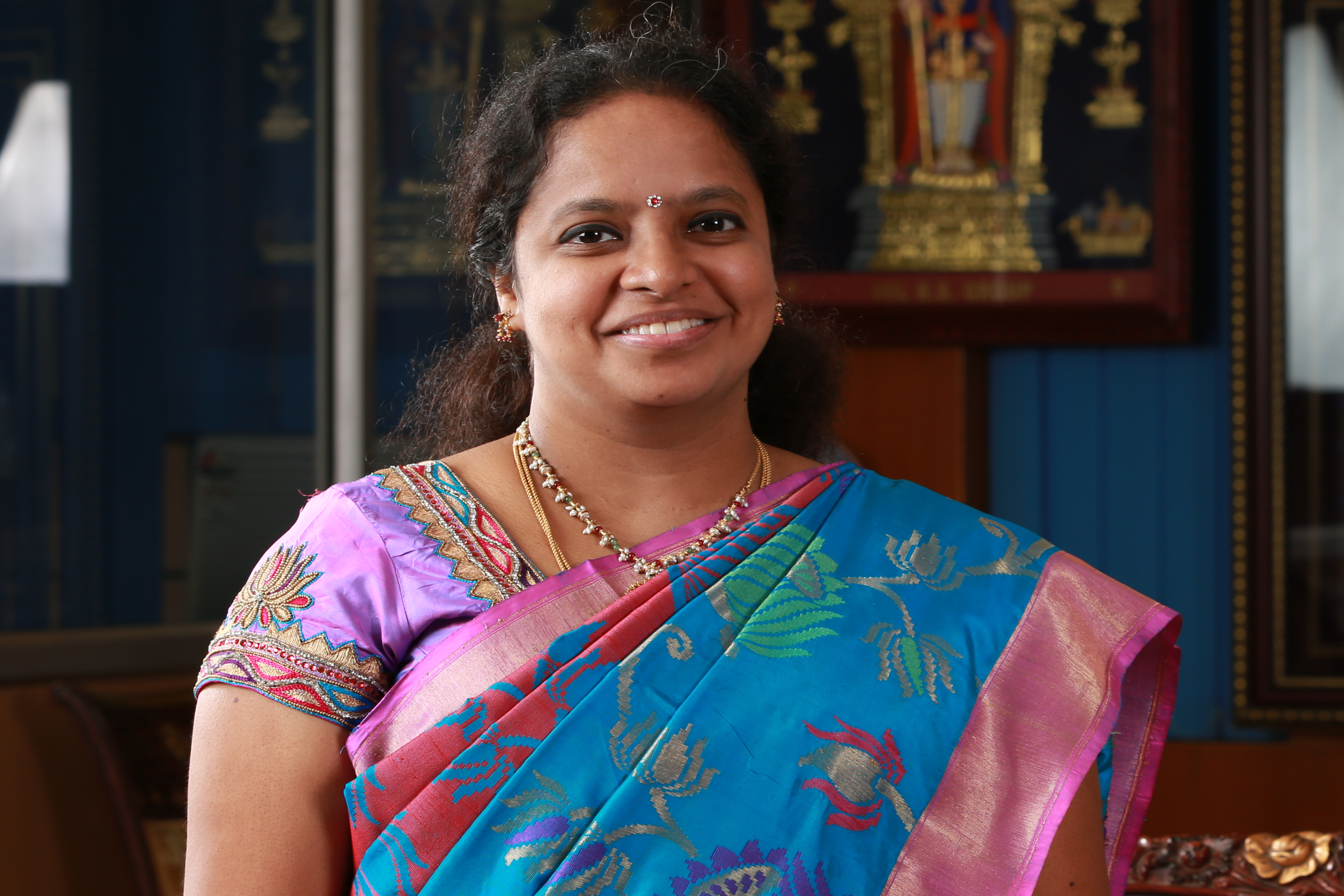
Message from the Chairperson
Chairperson and Managing Trustee
Dr. Rangarajan Mahalakshmi Kishore
Dr. Rangarajan Mahalakshmi Kishore
Chairperson and Managing Trustee
Institutional growth requires commitment, trust and continuous improvement. Vel Tech High Tech has been built through the cooperation of management, faculty, students, parents, alumni, employers and society. The strategic direction for 2026-2032 must preserve this spirit and strengthen the institution as a responsible, transparent and forward-looking academic system.
The institution is now moving into a phase where digital governance, industry-aligned curriculum, research culture, entrepreneurship, sustainability and quality accreditation will decide its future position. This requires careful planning, prudent resource use, accountable implementation and regular review. The plan must also recognize the importance of student services, faculty welfare, campus infrastructure and administrative efficiency.
I am confident that with collective effort, Vel Tech High Tech will enhance its academic quality, improve national visibility, support startups and innovation, create a paperless governance model and contribute meaningfully to society through SDG-linked education and outreach.
With best wishes, Dr. Rangarajan Mahalakshmi Kishore Chairperson and Managing Trustee
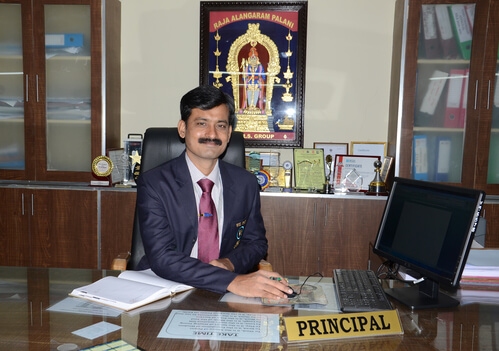
Message from the Principal
Principal
Dr. E. Kamalanaban
Dr. E. Kamalanaban
Principal
The Strategic Development Plan is a working instrument for institutional transformation. It is designed to connect the achievements of 2021-2025 with the short-term and long-term priorities of 2026-2032. The institution has made progress in curriculum reform, OBE implementation, student mentoring, placement training, research incentives, digital processes, events, circulars, HR workflows and student support systems.
The next phase requires deeper integration. Curriculum must be linked with SDGs, projects must be linked with real problems, publications must be linked with quality research, placements must be linked with skill analytics, and administration must be linked with paperless governance. Department-level plans will be monitored through measurable indicators so that progress is visible, comparable and correctable.
The institution will maintain faculty-student ratio in the range of 1:15 to 1:17, strengthen doctoral faculty percentage, enhance laboratory facilities, expand industry partnerships, develop the AICTE IDEA Lab as a student innovation hub and operationalize the Vel Tech High Tech MSME Business Incubator as a structured support system for innovation and entrepreneurship.
With best wishes, Dr. E. Kamalanaban Principal
Preface
A working plan for 2026-2032
The Strategic Development Plan 2026-2032 of Vel Tech High Tech Dr. Rangarajan Dr. Sakunthala Engineering College is designed as a detailed working document for institutional transformation. It is not limited to goals written at the institutional level. It converts the learning from the 2021-2025 development review into short-term and long-term actions at institutional, departmental, administrative and campus levels.
The plan follows a two-layer timeline. The short-term goals for 2026-2027 focus on strengthening systems already developed, closing operational gaps, integrating evidence and making department-level action plans measurable. The long-term goals for 2028-2032 focus on national visibility, quality accreditation, research maturity, paperless governance, SDG impact, industry integration and innovation-led growth.
The plan also treats SDGs as a cross-cutting institutional language. SDGs are not kept as a separate chapter alone; they are embedded in vision, mission, curriculum, placements, publications, NSS, YRC, NCC, events, projects, mini-projects, AICTE IDEA Lab, MSME Business Incubator, administration and campus operations.
Implementation principleEvery goal must identify the responsible unit, expected behavior, digital evidence, KPI, review cycle and improvement action.
Implementation depth and expected evidence
The planning philosophy is that institutional growth must be both ambitious and achievable. The goals are therefore framed with measurable outcomes, but the document also recognises the importance of culture, behaviour and stakeholder participation. Faculty, students, administrators, alumni, parents, recruiters and community partners all have a role in converting the plan into visible progress.
The plan also distinguishes between activity completion and outcome achievement. An activity may be completed when it is conducted, but the outcome is achieved only when student learning improves, research quality grows, governance becomes faster, evidence becomes stronger and stakeholders experience measurable benefit.
The institution will continue to pursue excellence in technical education with civic responsibility and competency. For 2026-2032, this vision will be operationalized through four connected ideas: future-ready curriculum, responsible innovation, student success and sustainable governance.
The mission of preparing global engineers for industrial challenges with social relevance will be expanded through subject-wise SDG mapping, industry-led learning, internships, project-based education, research culture, entrepreneurship, placement training and digital academic services. Moral practices and lifelong learning will be strengthened through mentoring, professional ethics, community outreach and continuous upskilling.
The development philosophy is that every institutional decision must improve at least one of the following: student learning, faculty capacity, research quality, industry relevance, social contribution, governance efficiency or campus sustainability. This makes the plan practical and reviewable.
Student success is the central outcome.
Faculty capacity is the enabling strength.
Digital governance is the operating backbone.
SDGs are the social and environmental compass.
Quality accreditation is the external validation.
Implementation depth and expected evidence
The planning philosophy is that institutional growth must be both ambitious and achievable. The goals are therefore framed with measurable outcomes, but the document also recognises the importance of culture, behaviour and stakeholder participation. Faculty, students, administrators, alumni, parents, recruiters and community partners all have a role in converting the plan into visible progress.
The plan also distinguishes between activity completion and outcome achievement. An activity may be completed when it is conducted, but the outcome is achieved only when student learning improves, research quality grows, governance becomes faster, evidence becomes stronger and stakeholders experience measurable benefit.
Strategic Architecture
Nine enablers for institutional transformation
The 2026-2032 plan is organized around nine development enablers. These enablers allow the institution to avoid fragmented planning and to connect academic, administrative and campus initiatives into one coherent strategic system. Each enabler has short-term goals, long-term goals, implementation behavior and measurable indicators.
This architecture also helps every department align its local plan with the institutional plan. For example, a department project should contribute to academic excellence, research output, innovation, SDG impact and placement readiness. Similarly, an administrative digital workflow should contribute to governance, finance, transparency and student service quality.
Academic Excellence Curriculum, pedagogy, OBE, assessment reforms, academic flexibility, learner support and graduate attributes.
Research Excellence Publications, citations, patents, funded projects, consultancy, ethics, interdisciplinary clusters and SDG-oriented research.
Capacity Building Faculty development, Ph.D. advancement, leadership training, technical upskilling and administrative capability building.
Global Engagement International lectures, virtual collaboration, student exposure, joint activities and phased international partnership development.
Innovation and Entrepreneurship AICTE IDEA Lab, MSME Business Incubator, IIC, prototype development, startup mentoring, IPR and commercialization.
SDGs and Extension NSS, YRC, NCC, campus sustainability, social outreach, UBA, public awareness, green audits and community-linked projects.
Industry and Alumni MoUs, internships, industry mentors, alumni talks, placement training, curriculum advisory and project review.
Governance and Finance Paperless governance, in-house LMS/ERP, dashboards, committees, risk controls, finance planning and evidence-based review.
Infrastructure and Facilities Laboratories, smart classrooms, digital library, campus maintenance, IT infrastructure, green facilities and accessibility.
Implementation depth and expected evidence
The planning philosophy is that institutional growth must be both ambitious and achievable. The goals are therefore framed with measurable outcomes, but the document also recognises the importance of culture, behaviour and stakeholder participation. Faculty, students, administrators, alumni, parents, recruiters and community partners all have a role in converting the plan into visible progress.
The plan also distinguishes between activity completion and outcome achievement. An activity may be completed when it is conducted, but the outcome is achieved only when student learning improves, research quality grows, governance becomes faster, evidence becomes stronger and stakeholders experience measurable benefit.
Strategic Targets 2032
Consolidated institutional KPIs
The long-term targets provide a measurable direction for the institution. These values are used consistently across the plan so that departments and committees work towards a common set of institutional outcomes. The targets are ambitious but practical when supported by department-level execution, periodic review and resource allocation.
1250Intake targetplanned capacity
300Faculty strengthwith 1:15 to 1:17 ratio
85%Ph.D. facultyProfessors and Associate Professors Ph.D.
2200Publicationsquality research output
150Patentsfiled/published/granted pipeline
85%Placementaverage package Rs.5-6 LPA
90Industry MoUsactive collaborations
Top 100NIRFengineering visibility
The targets will be reviewed annually by the institution and mapped to department-level responsibilities. Targets related to publications, patents, placements and SDG outcomes will be distributed across departments based on programme strength, faculty profile, laboratory capability and industry relevance.
Implementation depth and expected evidence
The planning philosophy is that institutional growth must be both ambitious and achievable. The goals are therefore framed with measurable outcomes, but the document also recognises the importance of culture, behaviour and stakeholder participation. Faculty, students, administrators, alumni, parents, recruiters and community partners all have a role in converting the plan into visible progress.
Short-Term Goals 2026-2027
System strengthening and gap closure
The short-term plan for 2026-2027 focuses on strengthening the institutional systems already developed. The priority is not to add unnecessary new activities, but to complete integration, improve quality, standardize evidence and make department-level responsibility clear. The short-term period must convert development gaps into practical actions.
In academics, the focus will be on subject-wise CO-PO-SDG mapping, department-wise teaching-learning review, NPTEL and value-added course monitoring, slow learner and advanced learner support, project outcome tracking and curriculum feedback integration. In administration, the focus will be on paperless approvals, workflow clarity, digital signatures where feasible and evidence archival.
In research and innovation, departments will be asked to identify research clusters, student publication opportunities, patentable projects, seed money proposals and funding opportunities. The AICTE IDEA Lab and MSME Business Incubator will be connected to mini-projects, final-year projects and entrepreneurship activities.
Short-term priority weightage
Digital integration
90%
SDG curriculum mapping
85%
Research pipeline
75%
Placement analytics
80%
Department KPIs
88%
Implementation depth and expected evidence
The planning philosophy is that institutional growth must be both ambitious and achievable. The goals are therefore framed with measurable outcomes, but the document also recognises the importance of culture, behaviour and stakeholder participation. Faculty, students, administrators, alumni, parents, recruiters and community partners all have a role in converting the plan into visible progress.
Long-Term Goals 2028-2032
Transformation and national positioning
The long-term plan for 2028-2032 focuses on institutional transformation. By this stage, all major academic and administrative workflows should be integrated with the in-house LMS/ERP, and the campus should move towards complete paperless governance. Departments should show evidence of improved publications, patents, funded projects, industry certifications, internships, placement outcomes and SDG-linked activities.
The institution will work towards NBA accreditation for all eligible UG programmes, the highest level in NAAC accreditation, NIRF ranking below 100 and stronger visibility through research, innovation, placements, green campus practices and stakeholder engagement. Long-term development will also include stronger alumni engagement and at least one meaningful international collaboration.
The long-term plan will be reviewed using annual institutional performance reports, department scorecards, external academic review, industry feedback, alumni inputs, student progression data and sustainability indicators.
100%
Paperless governance2032 target
100%
NBA eligible UGtarget coverage
95%
NAAC readinesshighest grade aim
85%
Placementinstitution target
Implementation depth and expected evidence
The planning philosophy is that institutional growth must be both ambitious and achievable. The goals are therefore framed with measurable outcomes, but the document also recognises the importance of culture, behaviour and stakeholder participation. Faculty, students, administrators, alumni, parents, recruiters and community partners all have a role in converting the plan into visible progress.
Academic Excellence - Strategic Intent
Narrative direction and institutional behavior
Academic Excellence is treated as a core enabler in the 2026-2032 plan. The institution will not implement this area as a separate activity list; it will embed the theme into academic calendars, department plans, student activities, administrative workflows, budget decisions and quality review mechanisms.
The institutional behavior expected under this enabler is clear: every department must plan, execute, document, review and improve. Curriculum, pedagogy, OBE, assessment reforms, academic flexibility, learner support and graduate attributes. The system will work only when the responsible persons understand the purpose, follow timelines and maintain digital evidence.
During the short-term phase, the institution will define standard formats, department responsibility, approval workflows and review dashboards. During the long-term phase, the focus will shift towards outcome quality, benchmarking, external validation and visible institutional impact.
Business ruleNo initiative under this enabler will be treated as complete unless it has evidence, responsible ownership, student/faculty benefit, review remarks and improvement action.
Implementation depth and expected evidence
Academic development will be treated as the primary driver of institutional quality. Each programme will strengthen curriculum relevance through Board of Studies inputs, alumni feedback, industry expert participation, value-added learning, NPTEL/SWAYAM exposure, bridge courses, remedial support and advanced learner pathways. Subject-level planning will move beyond syllabus completion and include learning outcomes, Bloom-level assessment, CO-PO-PSO attainment, SDG mapping and evidence of student capability.
The expected behaviour from departments is very specific: every course must have a clear teaching plan, assessment method, material repository, skill component, activity component and improvement record. Faculty members will be encouraged to use blended delivery, case studies, peer learning, laboratory demonstrations, mini-projects and digital submissions so that the learning process is visible, measurable and learner-centred.
Academic Excellence - Implementation Model
Short-term actions and long-term outcomes
The implementation of academic excellence will follow a structured model: planning at institutional level, execution at department/cell level, evidence through digital systems, review by IQAC/SPMC and improvement through action-taken reports. This prevents duplication and ensures that work done by departments contributes to institutional goals.
The short-term goals for 2026-2027 include creating or refining formats, identifying coordinators, mapping activities to KPIs and ensuring that departments report progress every quarter. The long-term goals for 2028-2032 include measurable growth, external recognition, cross-department collaboration and sustainability of the system.
The review behavior will be evidence-based. Instead of merely reporting that an event was conducted, the department must report objectives, SDG linkages, participation, outcomes, feedback, photographs/documents, follow-up actions and contribution to programme outcomes or institutional KPIs.
Define annual action plan at the beginning of the academic year.
Execute through department/cell coordinators with role clarity.
Capture evidence in the institutional digital repository.
Review quarterly using scorecards.
Close gaps through documented action-taken reports.
Implementation depth and expected evidence
Academic development will be treated as the primary driver of institutional quality. Each programme will strengthen curriculum relevance through Board of Studies inputs, alumni feedback, industry expert participation, value-added learning, NPTEL/SWAYAM exposure, bridge courses, remedial support and advanced learner pathways. Subject-level planning will move beyond syllabus completion and include learning outcomes, Bloom-level assessment, CO-PO-PSO attainment, SDG mapping and evidence of student capability.
The expected behaviour from departments is very specific: every course must have a clear teaching plan, assessment method, material repository, skill component, activity component and improvement record. Faculty members will be encouraged to use blended delivery, case studies, peer learning, laboratory demonstrations, mini-projects and digital submissions so that the learning process is visible, measurable and learner-centred.
Research Excellence - Strategic Intent
Narrative direction and institutional behavior
Research Excellence is treated as a core enabler in the 2026-2032 plan. The institution will not implement this area as a separate activity list; it will embed the theme into academic calendars, department plans, student activities, administrative workflows, budget decisions and quality review mechanisms.
The institutional behavior expected under this enabler is clear: every department must plan, execute, document, review and improve. Publications, citations, patents, funded projects, consultancy, ethics, interdisciplinary clusters and SDG-oriented research. The system will work only when the responsible persons understand the purpose, follow timelines and maintain digital evidence.
During the short-term phase, the institution will define standard formats, department responsibility, approval workflows and review dashboards. During the long-term phase, the focus will shift towards outcome quality, benchmarking, external validation and visible institutional impact.
Business ruleNo initiative under this enabler will be treated as complete unless it has evidence, responsible ownership, student/faculty benefit, review remarks and improvement action.
Implementation depth and expected evidence
Research development will move from individual publication effort to a department-driven research ecosystem. Each department will identify thrust areas, faculty groups, student research teams, potential funding agencies, expected publications, patentable outputs and consultancy opportunities. The emphasis will be on quality, relevance, ethics, interdisciplinarity and conversion of knowledge into prototypes or societal solutions.
The institutional behaviour required in this area is continuous mentoring. Faculty must be supported in proposal writing, journal selection, plagiarism control, research methodology, patent drafting, experimental validation and collaboration building. Students will be introduced to research through mini-projects, final-year projects, paper presentations, idea challenges and the AICTE IDEA Lab.
Research Excellence - Implementation Model
Short-term actions and long-term outcomes
The implementation of research excellence will follow a structured model: planning at institutional level, execution at department/cell level, evidence through digital systems, review by IQAC/SPMC and improvement through action-taken reports. This prevents duplication and ensures that work done by departments contributes to institutional goals.
The short-term goals for 2026-2027 include creating or refining formats, identifying coordinators, mapping activities to KPIs and ensuring that departments report progress every quarter. The long-term goals for 2028-2032 include measurable growth, external recognition, cross-department collaboration and sustainability of the system.
The review behavior will be evidence-based. Instead of merely reporting that an event was conducted, the department must report objectives, SDG linkages, participation, outcomes, feedback, photographs/documents, follow-up actions and contribution to programme outcomes or institutional KPIs.
Define annual action plan at the beginning of the academic year.
Execute through department/cell coordinators with role clarity.
Capture evidence in the institutional digital repository.
Review quarterly using scorecards.
Close gaps through documented action-taken reports.
Implementation depth and expected evidence
Research development will move from individual publication effort to a department-driven research ecosystem. Each department will identify thrust areas, faculty groups, student research teams, potential funding agencies, expected publications, patentable outputs and consultancy opportunities. The emphasis will be on quality, relevance, ethics, interdisciplinarity and conversion of knowledge into prototypes or societal solutions.
The institutional behaviour required in this area is continuous mentoring. Faculty must be supported in proposal writing, journal selection, plagiarism control, research methodology, patent drafting, experimental validation and collaboration building. Students will be introduced to research through mini-projects, final-year projects, paper presentations, idea challenges and the AICTE IDEA Lab.
Capacity Building - Strategic Intent
Narrative direction and institutional behavior
Capacity Building is treated as a core enabler in the 2026-2032 plan. The institution will not implement this area as a separate activity list; it will embed the theme into academic calendars, department plans, student activities, administrative workflows, budget decisions and quality review mechanisms.
The institutional behavior expected under this enabler is clear: every department must plan, execute, document, review and improve. Faculty development, Ph.D. advancement, leadership training, technical upskilling and administrative capability building. The system will work only when the responsible persons understand the purpose, follow timelines and maintain digital evidence.
During the short-term phase, the institution will define standard formats, department responsibility, approval workflows and review dashboards. During the long-term phase, the focus will shift towards outcome quality, benchmarking, external validation and visible institutional impact.
Business ruleNo initiative under this enabler will be treated as complete unless it has evidence, responsible ownership, student/faculty benefit, review remarks and improvement action.
Implementation depth and expected evidence
The section is deliberately written as an operational commitment rather than a descriptive note. Each activity must be supported by ownership, timeline, evidence, beneficiary details, review remarks and measurable improvement so that the plan can be used directly for academic audit, accreditation documentation and governing-body review.
The implementation approach will follow a decentralised execution model with central monitoring. Departments, cells and administrative units will execute the activities in their own context, while IQAC and the Strategic Planning and Monitoring Committee will review evidence, remove bottlenecks and ensure that the institutional direction remains uniform.
Capacity Building - Implementation Model
Short-term actions and long-term outcomes
The implementation of capacity building will follow a structured model: planning at institutional level, execution at department/cell level, evidence through digital systems, review by IQAC/SPMC and improvement through action-taken reports. This prevents duplication and ensures that work done by departments contributes to institutional goals.
The short-term goals for 2026-2027 include creating or refining formats, identifying coordinators, mapping activities to KPIs and ensuring that departments report progress every quarter. The long-term goals for 2028-2032 include measurable growth, external recognition, cross-department collaboration and sustainability of the system.
The review behavior will be evidence-based. Instead of merely reporting that an event was conducted, the department must report objectives, SDG linkages, participation, outcomes, feedback, photographs/documents, follow-up actions and contribution to programme outcomes or institutional KPIs.
Define annual action plan at the beginning of the academic year.
Execute through department/cell coordinators with role clarity.
Capture evidence in the institutional digital repository.
Review quarterly using scorecards.
Close gaps through documented action-taken reports.
Implementation depth and expected evidence
The section is deliberately written as an operational commitment rather than a descriptive note. Each activity must be supported by ownership, timeline, evidence, beneficiary details, review remarks and measurable improvement so that the plan can be used directly for academic audit, accreditation documentation and governing-body review.
The implementation approach will follow a decentralised execution model with central monitoring. Departments, cells and administrative units will execute the activities in their own context, while IQAC and the Strategic Planning and Monitoring Committee will review evidence, remove bottlenecks and ensure that the institutional direction remains uniform.
Global Engagement - Strategic Intent
Narrative direction and institutional behavior
Global Engagement is treated as a core enabler in the 2026-2032 plan. The institution will not implement this area as a separate activity list; it will embed the theme into academic calendars, department plans, student activities, administrative workflows, budget decisions and quality review mechanisms.
The institutional behavior expected under this enabler is clear: every department must plan, execute, document, review and improve. International lectures, virtual collaboration, student exposure, joint activities and phased international partnership development. The system will work only when the responsible persons understand the purpose, follow timelines and maintain digital evidence.
During the short-term phase, the institution will define standard formats, department responsibility, approval workflows and review dashboards. During the long-term phase, the focus will shift towards outcome quality, benchmarking, external validation and visible institutional impact.
Business ruleNo initiative under this enabler will be treated as complete unless it has evidence, responsible ownership, student/faculty benefit, review remarks and improvement action.
Implementation depth and expected evidence
The section is deliberately written as an operational commitment rather than a descriptive note. Each activity must be supported by ownership, timeline, evidence, beneficiary details, review remarks and measurable improvement so that the plan can be used directly for academic audit, accreditation documentation and governing-body review.
The implementation approach will follow a decentralised execution model with central monitoring. Departments, cells and administrative units will execute the activities in their own context, while IQAC and the Strategic Planning and Monitoring Committee will review evidence, remove bottlenecks and ensure that the institutional direction remains uniform.
Global Engagement - Implementation Model
Short-term actions and long-term outcomes
The implementation of global engagement will follow a structured model: planning at institutional level, execution at department/cell level, evidence through digital systems, review by IQAC/SPMC and improvement through action-taken reports. This prevents duplication and ensures that work done by departments contributes to institutional goals.
The short-term goals for 2026-2027 include creating or refining formats, identifying coordinators, mapping activities to KPIs and ensuring that departments report progress every quarter. The long-term goals for 2028-2032 include measurable growth, external recognition, cross-department collaboration and sustainability of the system.
The review behavior will be evidence-based. Instead of merely reporting that an event was conducted, the department must report objectives, SDG linkages, participation, outcomes, feedback, photographs/documents, follow-up actions and contribution to programme outcomes or institutional KPIs.
Define annual action plan at the beginning of the academic year.
Execute through department/cell coordinators with role clarity.
Capture evidence in the institutional digital repository.
Review quarterly using scorecards.
Close gaps through documented action-taken reports.
Implementation depth and expected evidence
The section is deliberately written as an operational commitment rather than a descriptive note. Each activity must be supported by ownership, timeline, evidence, beneficiary details, review remarks and measurable improvement so that the plan can be used directly for academic audit, accreditation documentation and governing-body review.
The implementation approach will follow a decentralised execution model with central monitoring. Departments, cells and administrative units will execute the activities in their own context, while IQAC and the Strategic Planning and Monitoring Committee will review evidence, remove bottlenecks and ensure that the institutional direction remains uniform.
Innovation and Entrepreneurship - Strategic Intent
Narrative direction and institutional behavior
Innovation and Entrepreneurship is treated as a core enabler in the 2026-2032 plan. The institution will not implement this area as a separate activity list; it will embed the theme into academic calendars, department plans, student activities, administrative workflows, budget decisions and quality review mechanisms.
The institutional behavior expected under this enabler is clear: every department must plan, execute, document, review and improve. AICTE IDEA Lab, MSME Business Incubator, IIC, prototype development, startup mentoring, IPR and commercialization. The system will work only when the responsible persons understand the purpose, follow timelines and maintain digital evidence.
During the short-term phase, the institution will define standard formats, department responsibility, approval workflows and review dashboards. During the long-term phase, the focus will shift towards outcome quality, benchmarking, external validation and visible institutional impact.
Business ruleNo initiative under this enabler will be treated as complete unless it has evidence, responsible ownership, student/faculty benefit, review remarks and improvement action.
Implementation depth and expected evidence
Innovation will be developed through a structured idea-to-impact pipeline. Student ideas, mini-projects and final-year projects will be screened for novelty, feasibility, SDG relevance, prototype potential and market value. Promising ideas will be routed through the AICTE IDEA Lab for prototyping and through the MSME Business Incubator for mentoring, IPR support, business validation and funding facilitation.
The expected institutional behaviour is that innovation should not end with a competition certificate. Departments will document problem statements, design iterations, prototype photographs, testing results, patent search reports, mentor feedback, budget support and commercialization status. This will help the institution convert classroom creativity into visible innovation outcomes.
Innovation and Entrepreneurship - Implementation Model
Short-term actions and long-term outcomes
The implementation of innovation and entrepreneurship will follow a structured model: planning at institutional level, execution at department/cell level, evidence through digital systems, review by IQAC/SPMC and improvement through action-taken reports. This prevents duplication and ensures that work done by departments contributes to institutional goals.
The short-term goals for 2026-2027 include creating or refining formats, identifying coordinators, mapping activities to KPIs and ensuring that departments report progress every quarter. The long-term goals for 2028-2032 include measurable growth, external recognition, cross-department collaboration and sustainability of the system.
The review behavior will be evidence-based. Instead of merely reporting that an event was conducted, the department must report objectives, SDG linkages, participation, outcomes, feedback, photographs/documents, follow-up actions and contribution to programme outcomes or institutional KPIs.
Define annual action plan at the beginning of the academic year.
Execute through department/cell coordinators with role clarity.
Capture evidence in the institutional digital repository.
Review quarterly using scorecards.
Close gaps through documented action-taken reports.
Implementation depth and expected evidence
Innovation will be developed through a structured idea-to-impact pipeline. Student ideas, mini-projects and final-year projects will be screened for novelty, feasibility, SDG relevance, prototype potential and market value. Promising ideas will be routed through the AICTE IDEA Lab for prototyping and through the MSME Business Incubator for mentoring, IPR support, business validation and funding facilitation.
The expected institutional behaviour is that innovation should not end with a competition certificate. Departments will document problem statements, design iterations, prototype photographs, testing results, patent search reports, mentor feedback, budget support and commercialization status. This will help the institution convert classroom creativity into visible innovation outcomes.
SDGs and Extension - Strategic Intent
Narrative direction and institutional behavior
SDGs and Extension is treated as a core enabler in the 2026-2032 plan. The institution will not implement this area as a separate activity list; it will embed the theme into academic calendars, department plans, student activities, administrative workflows, budget decisions and quality review mechanisms.
The institutional behavior expected under this enabler is clear: every department must plan, execute, document, review and improve. NSS, YRC, NCC, campus sustainability, social outreach, UBA, public awareness, green audits and community-linked projects. The system will work only when the responsible persons understand the purpose, follow timelines and maintain digital evidence.
During the short-term phase, the institution will define standard formats, department responsibility, approval workflows and review dashboards. During the long-term phase, the focus will shift towards outcome quality, benchmarking, external validation and visible institutional impact.
Business ruleNo initiative under this enabler will be treated as complete unless it has evidence, responsible ownership, student/faculty benefit, review remarks and improvement action.
Implementation depth and expected evidence
SDG implementation will not be limited to isolated awareness activities. The institution will treat SDGs as a cross-cutting quality framework that connects curriculum, research, projects, outreach, placement readiness, governance and campus operations. Every major academic or administrative initiative will be examined for its contribution to quality education, health, gender equity, clean water, affordable energy, innovation, sustainable communities, responsible consumption, climate action and partnerships.
NSS, YRC, NCC, clubs and professional societies will maintain structured records of outreach objectives, participant roles, beneficiary groups, photographs, reports, feedback and SDG alignment. This will convert community engagement from an event-reporting model into a measurable social-impact model suitable for NAAC, NBA, NIRF and institutional social responsibility documentation.
SDGs and Extension - Implementation Model
Short-term actions and long-term outcomes
The implementation of sdgs and extension will follow a structured model: planning at institutional level, execution at department/cell level, evidence through digital systems, review by IQAC/SPMC and improvement through action-taken reports. This prevents duplication and ensures that work done by departments contributes to institutional goals.
The short-term goals for 2026-2027 include creating or refining formats, identifying coordinators, mapping activities to KPIs and ensuring that departments report progress every quarter. The long-term goals for 2028-2032 include measurable growth, external recognition, cross-department collaboration and sustainability of the system.
The review behavior will be evidence-based. Instead of merely reporting that an event was conducted, the department must report objectives, SDG linkages, participation, outcomes, feedback, photographs/documents, follow-up actions and contribution to programme outcomes or institutional KPIs.
Define annual action plan at the beginning of the academic year.
Execute through department/cell coordinators with role clarity.
Capture evidence in the institutional digital repository.
Review quarterly using scorecards.
Close gaps through documented action-taken reports.
Implementation depth and expected evidence
SDG implementation will not be limited to isolated awareness activities. The institution will treat SDGs as a cross-cutting quality framework that connects curriculum, research, projects, outreach, placement readiness, governance and campus operations. Every major academic or administrative initiative will be examined for its contribution to quality education, health, gender equity, clean water, affordable energy, innovation, sustainable communities, responsible consumption, climate action and partnerships.
NSS, YRC, NCC, clubs and professional societies will maintain structured records of outreach objectives, participant roles, beneficiary groups, photographs, reports, feedback and SDG alignment. This will convert community engagement from an event-reporting model into a measurable social-impact model suitable for NAAC, NBA, NIRF and institutional social responsibility documentation.
Industry and Alumni - Strategic Intent
Narrative direction and institutional behavior
Industry and Alumni is treated as a core enabler in the 2026-2032 plan. The institution will not implement this area as a separate activity list; it will embed the theme into academic calendars, department plans, student activities, administrative workflows, budget decisions and quality review mechanisms.
The institutional behavior expected under this enabler is clear: every department must plan, execute, document, review and improve. MoUs, internships, industry mentors, alumni talks, placement training, curriculum advisory and project review. The system will work only when the responsible persons understand the purpose, follow timelines and maintain digital evidence.
During the short-term phase, the institution will define standard formats, department responsibility, approval workflows and review dashboards. During the long-term phase, the focus will shift towards outcome quality, benchmarking, external validation and visible institutional impact.
Business ruleNo initiative under this enabler will be treated as complete unless it has evidence, responsible ownership, student/faculty benefit, review remarks and improvement action.
Implementation depth and expected evidence
Industry engagement will be organised as a continuous student-development pathway. Training will begin with communication skills, aptitude, coding foundation and professional etiquette, and will progressively move to domain certification, internships, project review, company-specific preparation, mock interviews and placement conversion. The placement plan will therefore be connected with curriculum, faculty mentoring and alumni support.
Every MoU and industry contact must be evaluated by usefulness rather than by number alone. Active collaborations should generate internships, guest lectures, industry-defined projects, consultancy, joint certification, placement leads, research problems or entrepreneurship opportunities. Alumni will be engaged as mentors, evaluators, recruiters and institutional ambassadors.
Industry and Alumni - Implementation Model
Short-term actions and long-term outcomes
The implementation of industry and alumni will follow a structured model: planning at institutional level, execution at department/cell level, evidence through digital systems, review by IQAC/SPMC and improvement through action-taken reports. This prevents duplication and ensures that work done by departments contributes to institutional goals.
The short-term goals for 2026-2027 include creating or refining formats, identifying coordinators, mapping activities to KPIs and ensuring that departments report progress every quarter. The long-term goals for 2028-2032 include measurable growth, external recognition, cross-department collaboration and sustainability of the system.
The review behavior will be evidence-based. Instead of merely reporting that an event was conducted, the department must report objectives, SDG linkages, participation, outcomes, feedback, photographs/documents, follow-up actions and contribution to programme outcomes or institutional KPIs.
Define annual action plan at the beginning of the academic year.
Execute through department/cell coordinators with role clarity.
Capture evidence in the institutional digital repository.
Review quarterly using scorecards.
Close gaps through documented action-taken reports.
Implementation depth and expected evidence
Industry engagement will be organised as a continuous student-development pathway. Training will begin with communication skills, aptitude, coding foundation and professional etiquette, and will progressively move to domain certification, internships, project review, company-specific preparation, mock interviews and placement conversion. The placement plan will therefore be connected with curriculum, faculty mentoring and alumni support.
Every MoU and industry contact must be evaluated by usefulness rather than by number alone. Active collaborations should generate internships, guest lectures, industry-defined projects, consultancy, joint certification, placement leads, research problems or entrepreneurship opportunities. Alumni will be engaged as mentors, evaluators, recruiters and institutional ambassadors.
Governance and Finance - Strategic Intent
Narrative direction and institutional behavior
Governance and Finance is treated as a core enabler in the 2026-2032 plan. The institution will not implement this area as a separate activity list; it will embed the theme into academic calendars, department plans, student activities, administrative workflows, budget decisions and quality review mechanisms.
The institutional behavior expected under this enabler is clear: every department must plan, execute, document, review and improve. Paperless governance, in-house LMS/ERP, dashboards, committees, risk controls, finance planning and evidence-based review. The system will work only when the responsible persons understand the purpose, follow timelines and maintain digital evidence.
During the short-term phase, the institution will define standard formats, department responsibility, approval workflows and review dashboards. During the long-term phase, the focus will shift towards outcome quality, benchmarking, external validation and visible institutional impact.
Business ruleNo initiative under this enabler will be treated as complete unless it has evidence, responsible ownership, student/faculty benefit, review remarks and improvement action.
Implementation depth and expected evidence
Governance development will focus on transparency, speed, accountability and documentation discipline. The in-house LMS and ERP ecosystem will be used to reduce manual dependency in student services, faculty services, events, circulars, attendance, assignments, examination support, HR workflows, leave management, bonafide approval, feedback and monitoring dashboards.
The paperless-campus target requires more than digitisation of forms. Every workflow must include digital initiation, role-based approval, auto-generated communication, evidence storage, audit trail, escalation rules and archival retrieval. The institution will therefore treat each module as a business process with defined rules, not merely as a software page.
Governance and Finance - Implementation Model
Short-term actions and long-term outcomes
The implementation of governance and finance will follow a structured model: planning at institutional level, execution at department/cell level, evidence through digital systems, review by IQAC/SPMC and improvement through action-taken reports. This prevents duplication and ensures that work done by departments contributes to institutional goals.
The short-term goals for 2026-2027 include creating or refining formats, identifying coordinators, mapping activities to KPIs and ensuring that departments report progress every quarter. The long-term goals for 2028-2032 include measurable growth, external recognition, cross-department collaboration and sustainability of the system.
The review behavior will be evidence-based. Instead of merely reporting that an event was conducted, the department must report objectives, SDG linkages, participation, outcomes, feedback, photographs/documents, follow-up actions and contribution to programme outcomes or institutional KPIs.
Define annual action plan at the beginning of the academic year.
Execute through department/cell coordinators with role clarity.
Capture evidence in the institutional digital repository.
Review quarterly using scorecards.
Close gaps through documented action-taken reports.
Implementation depth and expected evidence
Governance development will focus on transparency, speed, accountability and documentation discipline. The in-house LMS and ERP ecosystem will be used to reduce manual dependency in student services, faculty services, events, circulars, attendance, assignments, examination support, HR workflows, leave management, bonafide approval, feedback and monitoring dashboards.
The paperless-campus target requires more than digitisation of forms. Every workflow must include digital initiation, role-based approval, auto-generated communication, evidence storage, audit trail, escalation rules and archival retrieval. The institution will therefore treat each module as a business process with defined rules, not merely as a software page.
Infrastructure and Facilities - Strategic Intent
Narrative direction and institutional behavior
Infrastructure and Facilities is treated as a core enabler in the 2026-2032 plan. The institution will not implement this area as a separate activity list; it will embed the theme into academic calendars, department plans, student activities, administrative workflows, budget decisions and quality review mechanisms.
The institutional behavior expected under this enabler is clear: every department must plan, execute, document, review and improve. Laboratories, smart classrooms, digital library, campus maintenance, IT infrastructure, green facilities and accessibility. The system will work only when the responsible persons understand the purpose, follow timelines and maintain digital evidence.
During the short-term phase, the institution will define standard formats, department responsibility, approval workflows and review dashboards. During the long-term phase, the focus will shift towards outcome quality, benchmarking, external validation and visible institutional impact.
Business ruleNo initiative under this enabler will be treated as complete unless it has evidence, responsible ownership, student/faculty benefit, review remarks and improvement action.
Implementation depth and expected evidence
Infrastructure development will be prioritised according to academic need, safety, sustainability and future-readiness. Laboratories, classrooms, seminar halls, digital systems, library resources, sports facilities, utilities and campus services will be reviewed periodically so that maintenance becomes preventive and planned rather than reactive and complaint-driven.
The campus will gradually function as a living laboratory for sustainability. Energy use, water management, waste segregation, green cover, accessibility, safety, fire readiness, equipment uptime and digital infrastructure will be linked to review indicators. This approach will support both student experience and accreditation evidence.
Infrastructure and Facilities - Implementation Model
Short-term actions and long-term outcomes
The implementation of infrastructure and facilities will follow a structured model: planning at institutional level, execution at department/cell level, evidence through digital systems, review by IQAC/SPMC and improvement through action-taken reports. This prevents duplication and ensures that work done by departments contributes to institutional goals.
The short-term goals for 2026-2027 include creating or refining formats, identifying coordinators, mapping activities to KPIs and ensuring that departments report progress every quarter. The long-term goals for 2028-2032 include measurable growth, external recognition, cross-department collaboration and sustainability of the system.
The review behavior will be evidence-based. Instead of merely reporting that an event was conducted, the department must report objectives, SDG linkages, participation, outcomes, feedback, photographs/documents, follow-up actions and contribution to programme outcomes or institutional KPIs.
Define annual action plan at the beginning of the academic year.
Execute through department/cell coordinators with role clarity.
Capture evidence in the institutional digital repository.
Review quarterly using scorecards.
Close gaps through documented action-taken reports.
Implementation depth and expected evidence
Infrastructure development will be prioritised according to academic need, safety, sustainability and future-readiness. Laboratories, classrooms, seminar halls, digital systems, library resources, sports facilities, utilities and campus services will be reviewed periodically so that maintenance becomes preventive and planned rather than reactive and complaint-driven.
The campus will gradually function as a living laboratory for sustainability. Energy use, water management, waste segregation, green cover, accessibility, safety, fire readiness, equipment uptime and digital infrastructure will be linked to review indicators. This approach will support both student experience and accreditation evidence.
SDG Implementation Architecture
Cross-cutting framework across the institution
SDG implementation in the 2026-2032 plan is designed as a cross-cutting framework. The institution will not restrict SDGs to environmental activities alone. SDGs will be integrated into curriculum, subject outcomes, projects, mini-projects, internships, placements, publications, patents, seminars, value-added courses, NPTEL, NSS, YRC, NCC, IDEA Lab, MSME Business Incubator, administration and campus operations.
The basic rule is that every academic and administrative activity should be examined for SDG relevance. A subject may support Quality Education, Industry Innovation, Clean Energy or Climate Action. A placement training module may support Decent Work and Economic Growth. A bonafide approval system may support strong institutions through transparent governance. A green campus initiative may support responsible consumption and climate action.
The SDG framework will be implemented at three levels: institutional policy level, department activity level and student outcome level. This ensures that SDG work is not only visible in reports but also reflected in learning, innovation, behavior and campus culture.
SDG 3 Good Health and Well-being
SDG 4 Quality Education
SDG 5 Gender Equality
SDG 6 Clean Water and Sanitation
SDG 7 Affordable and Clean Energy
SDG 8 Decent Work and Economic Growth
SDG 9 Industry, Innovation and Infrastructure
SDG 10 Reduced Inequalities
SDG 11 Sustainable Cities and Communities
SDG 12 Responsible Consumption and Production
SDG 13 Climate Action
SDG 16 Peace, Justice and Strong Institutions
SDG 17 Partnerships for the Goals
Implementation depth and expected evidence
SDG implementation will not be limited to isolated awareness activities. The institution will treat SDGs as a cross-cutting quality framework that connects curriculum, research, projects, outreach, placement readiness, governance and campus operations. Every major academic or administrative initiative will be examined for its contribution to quality education, health, gender equity, clean water, affordable energy, innovation, sustainable communities, responsible consumption, climate action and partnerships.
NSS, YRC, NCC, clubs and professional societies will maintain structured records of outreach objectives, participant roles, beneficiary groups, photographs, reports, feedback and SDG alignment. This will convert community engagement from an event-reporting model into a measurable social-impact model suitable for NAAC, NBA, NIRF and institutional social responsibility documentation.
SDG Implementation - Vision, Mission and Graduate Attributes
Operational behavior and evidence practice
SDGs will be reflected in institutional statements, graduate attributes, professional ethics, sustainability awareness and civic responsibility. Departments will identify how their programme outcomes contribute to society, environment and inclusive growth.
The business rule for this area is that every activity must have a clear purpose, responsible coordinator, evidence file, outcome statement and review comment. When the activity is SDG-linked, the mapping must be meaningful and should explain the actual contribution.
Short-term actions in 2026-2027 will focus on creating formats and training faculty/staff to record SDG evidence correctly. Long-term actions in 2028-2032 will focus on publishing annual SDG reports, improving measurable outcomes and using SDG dashboards for accreditation and institutional review.
Expected evidenceActivity note, SDG mapping, beneficiary details, photographs or documents, feedback, outcome statement and improvement action.
Implementation depth and expected evidence
SDG implementation will not be limited to isolated awareness activities. The institution will treat SDGs as a cross-cutting quality framework that connects curriculum, research, projects, outreach, placement readiness, governance and campus operations. Every major academic or administrative initiative will be examined for its contribution to quality education, health, gender equity, clean water, affordable energy, innovation, sustainable communities, responsible consumption, climate action and partnerships.
NSS, YRC, NCC, clubs and professional societies will maintain structured records of outreach objectives, participant roles, beneficiary groups, photographs, reports, feedback and SDG alignment. This will convert community engagement from an event-reporting model into a measurable social-impact model suitable for NAAC, NBA, NIRF and institutional social responsibility documentation.
SDG Implementation - Subject-Wise Curriculum
Operational behavior and evidence practice
Every subject will carry possible SDG tags where applicable. Faculty will map topics, assignments, experiments and projects to SDGs without forcing irrelevant mapping. The aim is meaningful integration, not decorative tagging.
The business rule for this area is that every activity must have a clear purpose, responsible coordinator, evidence file, outcome statement and review comment. When the activity is SDG-linked, the mapping must be meaningful and should explain the actual contribution.
Short-term actions in 2026-2027 will focus on creating formats and training faculty/staff to record SDG evidence correctly. Long-term actions in 2028-2032 will focus on publishing annual SDG reports, improving measurable outcomes and using SDG dashboards for accreditation and institutional review.
Expected evidenceActivity note, SDG mapping, beneficiary details, photographs or documents, feedback, outcome statement and improvement action.
Implementation depth and expected evidence
Academic development will be treated as the primary driver of institutional quality. Each programme will strengthen curriculum relevance through Board of Studies inputs, alumni feedback, industry expert participation, value-added learning, NPTEL/SWAYAM exposure, bridge courses, remedial support and advanced learner pathways. Subject-level planning will move beyond syllabus completion and include learning outcomes, Bloom-level assessment, CO-PO-PSO attainment, SDG mapping and evidence of student capability.
The expected behaviour from departments is very specific: every course must have a clear teaching plan, assessment method, material repository, skill component, activity component and improvement record. Faculty members will be encouraged to use blended delivery, case studies, peer learning, laboratory demonstrations, mini-projects and digital submissions so that the learning process is visible, measurable and learner-centred.
SDG Implementation - Placements and Employability
Operational behavior and evidence practice
Placement training will be mapped to SDG 4 and SDG 8 through quality education, employability, decent work, communication, coding, aptitude, professional ethics and career readiness.
The business rule for this area is that every activity must have a clear purpose, responsible coordinator, evidence file, outcome statement and review comment. When the activity is SDG-linked, the mapping must be meaningful and should explain the actual contribution.
Short-term actions in 2026-2027 will focus on creating formats and training faculty/staff to record SDG evidence correctly. Long-term actions in 2028-2032 will focus on publishing annual SDG reports, improving measurable outcomes and using SDG dashboards for accreditation and institutional review.
Expected evidenceActivity note, SDG mapping, beneficiary details, photographs or documents, feedback, outcome statement and improvement action.
Implementation depth and expected evidence
SDG implementation will not be limited to isolated awareness activities. The institution will treat SDGs as a cross-cutting quality framework that connects curriculum, research, projects, outreach, placement readiness, governance and campus operations. Every major academic or administrative initiative will be examined for its contribution to quality education, health, gender equity, clean water, affordable energy, innovation, sustainable communities, responsible consumption, climate action and partnerships.
NSS, YRC, NCC, clubs and professional societies will maintain structured records of outreach objectives, participant roles, beneficiary groups, photographs, reports, feedback and SDG alignment. This will convert community engagement from an event-reporting model into a measurable social-impact model suitable for NAAC, NBA, NIRF and institutional social responsibility documentation.
SDG Implementation - NSS, YRC and NCC
Operational behavior and evidence practice
Extension units will map camps, blood donation, awareness, cleanliness, coastal protection, voter awareness, health, discipline and disaster response activities to relevant SDGs.
The business rule for this area is that every activity must have a clear purpose, responsible coordinator, evidence file, outcome statement and review comment. When the activity is SDG-linked, the mapping must be meaningful and should explain the actual contribution.
Short-term actions in 2026-2027 will focus on creating formats and training faculty/staff to record SDG evidence correctly. Long-term actions in 2028-2032 will focus on publishing annual SDG reports, improving measurable outcomes and using SDG dashboards for accreditation and institutional review.
Expected evidenceActivity note, SDG mapping, beneficiary details, photographs or documents, feedback, outcome statement and improvement action.
Implementation depth and expected evidence
SDG implementation will not be limited to isolated awareness activities. The institution will treat SDGs as a cross-cutting quality framework that connects curriculum, research, projects, outreach, placement readiness, governance and campus operations. Every major academic or administrative initiative will be examined for its contribution to quality education, health, gender equity, clean water, affordable energy, innovation, sustainable communities, responsible consumption, climate action and partnerships.
NSS, YRC, NCC, clubs and professional societies will maintain structured records of outreach objectives, participant roles, beneficiary groups, photographs, reports, feedback and SDG alignment. This will convert community engagement from an event-reporting model into a measurable social-impact model suitable for NAAC, NBA, NIRF and institutional social responsibility documentation.
SDG Implementation - Publications and Research
Operational behavior and evidence practice
Faculty and student publications will identify sustainability relevance where appropriate. Research clusters will promote clean energy, water treatment, healthcare, AI for society, sustainable infrastructure and green processes.
The business rule for this area is that every activity must have a clear purpose, responsible coordinator, evidence file, outcome statement and review comment. When the activity is SDG-linked, the mapping must be meaningful and should explain the actual contribution.
Short-term actions in 2026-2027 will focus on creating formats and training faculty/staff to record SDG evidence correctly. Long-term actions in 2028-2032 will focus on publishing annual SDG reports, improving measurable outcomes and using SDG dashboards for accreditation and institutional review.
Expected evidenceActivity note, SDG mapping, beneficiary details, photographs or documents, feedback, outcome statement and improvement action.
Implementation depth and expected evidence
Research development will move from individual publication effort to a department-driven research ecosystem. Each department will identify thrust areas, faculty groups, student research teams, potential funding agencies, expected publications, patentable outputs and consultancy opportunities. The emphasis will be on quality, relevance, ethics, interdisciplinarity and conversion of knowledge into prototypes or societal solutions.
The institutional behaviour required in this area is continuous mentoring. Faculty must be supported in proposal writing, journal selection, plagiarism control, research methodology, patent drafting, experimental validation and collaboration building. Students will be introduced to research through mini-projects, final-year projects, paper presentations, idea challenges and the AICTE IDEA Lab.
SDG Implementation - Events, Seminars and VACs
Operational behavior and evidence practice
Seminars, value-added courses, workshops, NPTEL, awareness programmes and competitions will include SDG tags, outcome notes and evidence of learning impact.
The business rule for this area is that every activity must have a clear purpose, responsible coordinator, evidence file, outcome statement and review comment. When the activity is SDG-linked, the mapping must be meaningful and should explain the actual contribution.
Short-term actions in 2026-2027 will focus on creating formats and training faculty/staff to record SDG evidence correctly. Long-term actions in 2028-2032 will focus on publishing annual SDG reports, improving measurable outcomes and using SDG dashboards for accreditation and institutional review.
Expected evidenceActivity note, SDG mapping, beneficiary details, photographs or documents, feedback, outcome statement and improvement action.
Implementation depth and expected evidence
SDG implementation will not be limited to isolated awareness activities. The institution will treat SDGs as a cross-cutting quality framework that connects curriculum, research, projects, outreach, placement readiness, governance and campus operations. Every major academic or administrative initiative will be examined for its contribution to quality education, health, gender equity, clean water, affordable energy, innovation, sustainable communities, responsible consumption, climate action and partnerships.
NSS, YRC, NCC, clubs and professional societies will maintain structured records of outreach objectives, participant roles, beneficiary groups, photographs, reports, feedback and SDG alignment. This will convert community engagement from an event-reporting model into a measurable social-impact model suitable for NAAC, NBA, NIRF and institutional social responsibility documentation.
SDG Implementation - Projects and Mini-Projects
Operational behavior and evidence practice
Every mini-project and final-year project will be encouraged to identify problem context, beneficiary, SDG relevance, innovation potential and possible conversion to patent, publication or prototype.
The business rule for this area is that every activity must have a clear purpose, responsible coordinator, evidence file, outcome statement and review comment. When the activity is SDG-linked, the mapping must be meaningful and should explain the actual contribution.
Short-term actions in 2026-2027 will focus on creating formats and training faculty/staff to record SDG evidence correctly. Long-term actions in 2028-2032 will focus on publishing annual SDG reports, improving measurable outcomes and using SDG dashboards for accreditation and institutional review.
Expected evidenceActivity note, SDG mapping, beneficiary details, photographs or documents, feedback, outcome statement and improvement action.
Implementation depth and expected evidence
SDG implementation will not be limited to isolated awareness activities. The institution will treat SDGs as a cross-cutting quality framework that connects curriculum, research, projects, outreach, placement readiness, governance and campus operations. Every major academic or administrative initiative will be examined for its contribution to quality education, health, gender equity, clean water, affordable energy, innovation, sustainable communities, responsible consumption, climate action and partnerships.
NSS, YRC, NCC, clubs and professional societies will maintain structured records of outreach objectives, participant roles, beneficiary groups, photographs, reports, feedback and SDG alignment. This will convert community engagement from an event-reporting model into a measurable social-impact model suitable for NAAC, NBA, NIRF and institutional social responsibility documentation.
SDG Implementation - AICTE IDEA Lab
Operational behavior and evidence practice
IDEA Lab activities will promote hands-on learning, design thinking, prototyping, interdisciplinary problem solving and innovation aligned with SDGs and industry needs.
The business rule for this area is that every activity must have a clear purpose, responsible coordinator, evidence file, outcome statement and review comment. When the activity is SDG-linked, the mapping must be meaningful and should explain the actual contribution.
Short-term actions in 2026-2027 will focus on creating formats and training faculty/staff to record SDG evidence correctly. Long-term actions in 2028-2032 will focus on publishing annual SDG reports, improving measurable outcomes and using SDG dashboards for accreditation and institutional review.
Expected evidenceActivity note, SDG mapping, beneficiary details, photographs or documents, feedback, outcome statement and improvement action.
Implementation depth and expected evidence
SDG implementation will not be limited to isolated awareness activities. The institution will treat SDGs as a cross-cutting quality framework that connects curriculum, research, projects, outreach, placement readiness, governance and campus operations. Every major academic or administrative initiative will be examined for its contribution to quality education, health, gender equity, clean water, affordable energy, innovation, sustainable communities, responsible consumption, climate action and partnerships.
NSS, YRC, NCC, clubs and professional societies will maintain structured records of outreach objectives, participant roles, beneficiary groups, photographs, reports, feedback and SDG alignment. This will convert community engagement from an event-reporting model into a measurable social-impact model suitable for NAAC, NBA, NIRF and institutional social responsibility documentation.
SDG Implementation - MSME Business Incubator
Operational behavior and evidence practice
The incubator will support student and faculty ideas with commercialization potential, mentorship, documentation, prototype refinement, MSME scheme awareness and startup readiness.
The business rule for this area is that every activity must have a clear purpose, responsible coordinator, evidence file, outcome statement and review comment. When the activity is SDG-linked, the mapping must be meaningful and should explain the actual contribution.
Short-term actions in 2026-2027 will focus on creating formats and training faculty/staff to record SDG evidence correctly. Long-term actions in 2028-2032 will focus on publishing annual SDG reports, improving measurable outcomes and using SDG dashboards for accreditation and institutional review.
Expected evidenceActivity note, SDG mapping, beneficiary details, photographs or documents, feedback, outcome statement and improvement action.
Implementation depth and expected evidence
SDG implementation will not be limited to isolated awareness activities. The institution will treat SDGs as a cross-cutting quality framework that connects curriculum, research, projects, outreach, placement readiness, governance and campus operations. Every major academic or administrative initiative will be examined for its contribution to quality education, health, gender equity, clean water, affordable energy, innovation, sustainable communities, responsible consumption, climate action and partnerships.
NSS, YRC, NCC, clubs and professional societies will maintain structured records of outreach objectives, participant roles, beneficiary groups, photographs, reports, feedback and SDG alignment. This will convert community engagement from an event-reporting model into a measurable social-impact model suitable for NAAC, NBA, NIRF and institutional social responsibility documentation.
SDG Implementation - Administration and Campus
Operational behavior and evidence practice
Paperless governance, digital approvals, green campus, maintenance, waste management, energy saving, water conservation and inclusive services will be mapped to SDG governance indicators.
The business rule for this area is that every activity must have a clear purpose, responsible coordinator, evidence file, outcome statement and review comment. When the activity is SDG-linked, the mapping must be meaningful and should explain the actual contribution.
Short-term actions in 2026-2027 will focus on creating formats and training faculty/staff to record SDG evidence correctly. Long-term actions in 2028-2032 will focus on publishing annual SDG reports, improving measurable outcomes and using SDG dashboards for accreditation and institutional review.
Expected evidenceActivity note, SDG mapping, beneficiary details, photographs or documents, feedback, outcome statement and improvement action.
Implementation depth and expected evidence
SDG implementation will not be limited to isolated awareness activities. The institution will treat SDGs as a cross-cutting quality framework that connects curriculum, research, projects, outreach, placement readiness, governance and campus operations. Every major academic or administrative initiative will be examined for its contribution to quality education, health, gender equity, clean water, affordable energy, innovation, sustainable communities, responsible consumption, climate action and partnerships.
NSS, YRC, NCC, clubs and professional societies will maintain structured records of outreach objectives, participant roles, beneficiary groups, photographs, reports, feedback and SDG alignment. This will convert community engagement from an event-reporting model into a measurable social-impact model suitable for NAAC, NBA, NIRF and institutional social responsibility documentation.
Computer Science and Engineering - Department Development Plan
Academic and professional direction
The Computer Science and Engineering department will implement the 2026-2032 plan through a department-level development file that connects curriculum, faculty, students, laboratories, projects, research, industry and SDGs. The department focus areas include AI-enabled software engineering, secure systems, cloud computing, full-stack development, data structures, coding culture, student publication and product development.
The department will identify annual priorities at the beginning of every academic year. Each priority must be linked to at least one institutional enabler such as academic excellence, research, industry collaboration, SDG implementation, innovation, capacity building or digital governance. Department meetings will review progress against the plan rather than discussing activities in isolation.
The department will maintain evidence for lesson planning, CO-PO-SDG mapping, course files, attendance, mentoring, assignments, NPTEL, value-added courses, seminars, internships, mini-projects, final-year projects, publications, patents, alumni interactions and placement training.
Maintain a department strategic file with yearly updates.
Conduct curriculum review based on feedback and industry relevance.
Map projects and events to SDGs where meaningful.
Strengthen student publications, patents and competitions.
Improve placement readiness through skill analytics.
Implementation depth and expected evidence
The department plan is designed to convert institutional goals into discipline-specific action. Each department must identify its academic priorities, laboratory requirements, research themes, faculty development needs, placement skill gaps, professional society activities, SDG opportunities and industry partners. The plan will be reviewed through departmental meetings and submitted to IQAC for consolidation.
Short-term goals will focus on immediate strengthening: syllabus delivery, faculty training, lab readiness, project mentoring, internship support, student publications, events and documentation. Long-term goals will focus on higher-value outcomes such as patents, funded projects, consultancy, advanced laboratories, accreditation excellence, interdisciplinary centres and strong placement pathways.
Computer Science and Engineering - Short-Term and Long-Term Goals
2026-2027 and 2028-2032
Short-term goals for 2026-2027 will focus on strengthening academic documentation, updating laboratory usage plans, improving project review quality, identifying SDG-linked activities, increasing student certification and creating a department-level KPI dashboard. The department must also identify faculty coordinators for research, placement, SDG, events and digital evidence.
Long-term goals for 2028-2032 will focus on nationally visible outcomes: improved publications, patents, funded proposals, industry projects, consultancy, higher placement percentage, alumni contribution, modern laboratories and visible contribution to institutional accreditation and ranking goals.
The department business rule is that no major activity should be conducted without defining objective, student benefit, outcome measure and evidence responsibility. This will make the department ready for accreditation, audits and annual strategic review.
Planning Area
2026-2027 Short-Term Focus
2028-2032 Long-Term Focus
Curriculum
Subject-wise CO-PO-SDG mapping and industry feedback
Advanced electives, interdisciplinary modules and periodic revision
Research
Faculty research clusters and student publication initiation
Quality publications, patents, funded projects and consultancy
Placement
Skill gap identification and training linkage
Higher placement percentage and improved salary profile
Innovation
Mini-project screening for IDEA Lab
Prototype, patent, startup and incubator linkage
Implementation depth and expected evidence
The department plan is designed to convert institutional goals into discipline-specific action. Each department must identify its academic priorities, laboratory requirements, research themes, faculty development needs, placement skill gaps, professional society activities, SDG opportunities and industry partners. The plan will be reviewed through departmental meetings and submitted to IQAC for consolidation.
Computer Science and Engineering (AI & ML) - Department Development Plan
Academic and professional direction
The Computer Science and Engineering (AI & ML) department will implement the 2026-2032 plan through a department-level development file that connects curriculum, faculty, students, laboratories, projects, research, industry and SDGs. The department focus areas include Machine learning, deep learning, responsible AI, generative AI, model deployment, intelligent automation and interdisciplinary AI applications.
The department will identify annual priorities at the beginning of every academic year. Each priority must be linked to at least one institutional enabler such as academic excellence, research, industry collaboration, SDG implementation, innovation, capacity building or digital governance. Department meetings will review progress against the plan rather than discussing activities in isolation.
The department will maintain evidence for lesson planning, CO-PO-SDG mapping, course files, attendance, mentoring, assignments, NPTEL, value-added courses, seminars, internships, mini-projects, final-year projects, publications, patents, alumni interactions and placement training.
Maintain a department strategic file with yearly updates.
Conduct curriculum review based on feedback and industry relevance.
Map projects and events to SDGs where meaningful.
Strengthen student publications, patents and competitions.
Improve placement readiness through skill analytics.
Implementation depth and expected evidence
The department plan is designed to convert institutional goals into discipline-specific action. Each department must identify its academic priorities, laboratory requirements, research themes, faculty development needs, placement skill gaps, professional society activities, SDG opportunities and industry partners. The plan will be reviewed through departmental meetings and submitted to IQAC for consolidation.
Short-term goals will focus on immediate strengthening: syllabus delivery, faculty training, lab readiness, project mentoring, internship support, student publications, events and documentation. Long-term goals will focus on higher-value outcomes such as patents, funded projects, consultancy, advanced laboratories, accreditation excellence, interdisciplinary centres and strong placement pathways.
Computer Science and Engineering (AI & ML) - Short-Term and Long-Term Goals
2026-2027 and 2028-2032
Short-term goals for 2026-2027 will focus on strengthening academic documentation, updating laboratory usage plans, improving project review quality, identifying SDG-linked activities, increasing student certification and creating a department-level KPI dashboard. The department must also identify faculty coordinators for research, placement, SDG, events and digital evidence.
Long-term goals for 2028-2032 will focus on nationally visible outcomes: improved publications, patents, funded proposals, industry projects, consultancy, higher placement percentage, alumni contribution, modern laboratories and visible contribution to institutional accreditation and ranking goals.
The department business rule is that no major activity should be conducted without defining objective, student benefit, outcome measure and evidence responsibility. This will make the department ready for accreditation, audits and annual strategic review.
Planning Area
2026-2027 Short-Term Focus
2028-2032 Long-Term Focus
Curriculum
Subject-wise CO-PO-SDG mapping and industry feedback
Advanced electives, interdisciplinary modules and periodic revision
Research
Faculty research clusters and student publication initiation
Quality publications, patents, funded projects and consultancy
Placement
Skill gap identification and training linkage
Higher placement percentage and improved salary profile
Innovation
Mini-project screening for IDEA Lab
Prototype, patent, startup and incubator linkage
Implementation depth and expected evidence
The department plan is designed to convert institutional goals into discipline-specific action. Each department must identify its academic priorities, laboratory requirements, research themes, faculty development needs, placement skill gaps, professional society activities, SDG opportunities and industry partners. The plan will be reviewed through departmental meetings and submitted to IQAC for consolidation.
Artificial Intelligence and Data Science - Department Development Plan
Academic and professional direction
The Artificial Intelligence and Data Science department will implement the 2026-2032 plan through a department-level development file that connects curriculum, faculty, students, laboratories, projects, research, industry and SDGs. The department focus areas include data analytics, business intelligence, MLOps, data visualization, decision science, AI for sustainability and industry problem solving.
The department will identify annual priorities at the beginning of every academic year. Each priority must be linked to at least one institutional enabler such as academic excellence, research, industry collaboration, SDG implementation, innovation, capacity building or digital governance. Department meetings will review progress against the plan rather than discussing activities in isolation.
The department will maintain evidence for lesson planning, CO-PO-SDG mapping, course files, attendance, mentoring, assignments, NPTEL, value-added courses, seminars, internships, mini-projects, final-year projects, publications, patents, alumni interactions and placement training.
Maintain a department strategic file with yearly updates.
Conduct curriculum review based on feedback and industry relevance.
Map projects and events to SDGs where meaningful.
Strengthen student publications, patents and competitions.
Improve placement readiness through skill analytics.
Implementation depth and expected evidence
The department plan is designed to convert institutional goals into discipline-specific action. Each department must identify its academic priorities, laboratory requirements, research themes, faculty development needs, placement skill gaps, professional society activities, SDG opportunities and industry partners. The plan will be reviewed through departmental meetings and submitted to IQAC for consolidation.
Short-term goals will focus on immediate strengthening: syllabus delivery, faculty training, lab readiness, project mentoring, internship support, student publications, events and documentation. Long-term goals will focus on higher-value outcomes such as patents, funded projects, consultancy, advanced laboratories, accreditation excellence, interdisciplinary centres and strong placement pathways.
Artificial Intelligence and Data Science - Short-Term and Long-Term Goals
2026-2027 and 2028-2032
Short-term goals for 2026-2027 will focus on strengthening academic documentation, updating laboratory usage plans, improving project review quality, identifying SDG-linked activities, increasing student certification and creating a department-level KPI dashboard. The department must also identify faculty coordinators for research, placement, SDG, events and digital evidence.
Long-term goals for 2028-2032 will focus on nationally visible outcomes: improved publications, patents, funded proposals, industry projects, consultancy, higher placement percentage, alumni contribution, modern laboratories and visible contribution to institutional accreditation and ranking goals.
The department business rule is that no major activity should be conducted without defining objective, student benefit, outcome measure and evidence responsibility. This will make the department ready for accreditation, audits and annual strategic review.
Planning Area
2026-2027 Short-Term Focus
2028-2032 Long-Term Focus
Curriculum
Subject-wise CO-PO-SDG mapping and industry feedback
Advanced electives, interdisciplinary modules and periodic revision
Research
Faculty research clusters and student publication initiation
Quality publications, patents, funded projects and consultancy
Placement
Skill gap identification and training linkage
Higher placement percentage and improved salary profile
Innovation
Mini-project screening for IDEA Lab
Prototype, patent, startup and incubator linkage
Implementation depth and expected evidence
The department plan is designed to convert institutional goals into discipline-specific action. Each department must identify its academic priorities, laboratory requirements, research themes, faculty development needs, placement skill gaps, professional society activities, SDG opportunities and industry partners. The plan will be reviewed through departmental meetings and submitted to IQAC for consolidation.
Information Technology - Department Development Plan
Academic and professional direction
The Information Technology department will implement the 2026-2032 plan through a department-level development file that connects curriculum, faculty, students, laboratories, projects, research, industry and SDGs. The department focus areas include web technologies, networks, cyber security, enterprise applications, DevOps, digital services and industry certification tracks.
The department will identify annual priorities at the beginning of every academic year. Each priority must be linked to at least one institutional enabler such as academic excellence, research, industry collaboration, SDG implementation, innovation, capacity building or digital governance. Department meetings will review progress against the plan rather than discussing activities in isolation.
The department will maintain evidence for lesson planning, CO-PO-SDG mapping, course files, attendance, mentoring, assignments, NPTEL, value-added courses, seminars, internships, mini-projects, final-year projects, publications, patents, alumni interactions and placement training.
Maintain a department strategic file with yearly updates.
Conduct curriculum review based on feedback and industry relevance.
Map projects and events to SDGs where meaningful.
Strengthen student publications, patents and competitions.
Improve placement readiness through skill analytics.
Implementation depth and expected evidence
The department plan is designed to convert institutional goals into discipline-specific action. Each department must identify its academic priorities, laboratory requirements, research themes, faculty development needs, placement skill gaps, professional society activities, SDG opportunities and industry partners. The plan will be reviewed through departmental meetings and submitted to IQAC for consolidation.
Short-term goals will focus on immediate strengthening: syllabus delivery, faculty training, lab readiness, project mentoring, internship support, student publications, events and documentation. Long-term goals will focus on higher-value outcomes such as patents, funded projects, consultancy, advanced laboratories, accreditation excellence, interdisciplinary centres and strong placement pathways.
Information Technology - Short-Term and Long-Term Goals
2026-2027 and 2028-2032
Short-term goals for 2026-2027 will focus on strengthening academic documentation, updating laboratory usage plans, improving project review quality, identifying SDG-linked activities, increasing student certification and creating a department-level KPI dashboard. The department must also identify faculty coordinators for research, placement, SDG, events and digital evidence.
Long-term goals for 2028-2032 will focus on nationally visible outcomes: improved publications, patents, funded proposals, industry projects, consultancy, higher placement percentage, alumni contribution, modern laboratories and visible contribution to institutional accreditation and ranking goals.
The department business rule is that no major activity should be conducted without defining objective, student benefit, outcome measure and evidence responsibility. This will make the department ready for accreditation, audits and annual strategic review.
Planning Area
2026-2027 Short-Term Focus
2028-2032 Long-Term Focus
Curriculum
Subject-wise CO-PO-SDG mapping and industry feedback
Advanced electives, interdisciplinary modules and periodic revision
Research
Faculty research clusters and student publication initiation
Quality publications, patents, funded projects and consultancy
Placement
Skill gap identification and training linkage
Higher placement percentage and improved salary profile
Innovation
Mini-project screening for IDEA Lab
Prototype, patent, startup and incubator linkage
Implementation depth and expected evidence
The department plan is designed to convert institutional goals into discipline-specific action. Each department must identify its academic priorities, laboratory requirements, research themes, faculty development needs, placement skill gaps, professional society activities, SDG opportunities and industry partners. The plan will be reviewed through departmental meetings and submitted to IQAC for consolidation.
Electronics and Communication Engineering - Department Development Plan
Academic and professional direction
The Electronics and Communication Engineering department will implement the 2026-2032 plan through a department-level development file that connects curriculum, faculty, students, laboratories, projects, research, industry and SDGs. The department focus areas include IoT, embedded systems, VLSI, communication systems, signal processing, EV electronics, sensors and hardware prototyping.
The department will identify annual priorities at the beginning of every academic year. Each priority must be linked to at least one institutional enabler such as academic excellence, research, industry collaboration, SDG implementation, innovation, capacity building or digital governance. Department meetings will review progress against the plan rather than discussing activities in isolation.
The department will maintain evidence for lesson planning, CO-PO-SDG mapping, course files, attendance, mentoring, assignments, NPTEL, value-added courses, seminars, internships, mini-projects, final-year projects, publications, patents, alumni interactions and placement training.
Maintain a department strategic file with yearly updates.
Conduct curriculum review based on feedback and industry relevance.
Map projects and events to SDGs where meaningful.
Strengthen student publications, patents and competitions.
Improve placement readiness through skill analytics.
Implementation depth and expected evidence
The department plan is designed to convert institutional goals into discipline-specific action. Each department must identify its academic priorities, laboratory requirements, research themes, faculty development needs, placement skill gaps, professional society activities, SDG opportunities and industry partners. The plan will be reviewed through departmental meetings and submitted to IQAC for consolidation.
Short-term goals will focus on immediate strengthening: syllabus delivery, faculty training, lab readiness, project mentoring, internship support, student publications, events and documentation. Long-term goals will focus on higher-value outcomes such as patents, funded projects, consultancy, advanced laboratories, accreditation excellence, interdisciplinary centres and strong placement pathways.
Electronics and Communication Engineering - Short-Term and Long-Term Goals
2026-2027 and 2028-2032
Short-term goals for 2026-2027 will focus on strengthening academic documentation, updating laboratory usage plans, improving project review quality, identifying SDG-linked activities, increasing student certification and creating a department-level KPI dashboard. The department must also identify faculty coordinators for research, placement, SDG, events and digital evidence.
Long-term goals for 2028-2032 will focus on nationally visible outcomes: improved publications, patents, funded proposals, industry projects, consultancy, higher placement percentage, alumni contribution, modern laboratories and visible contribution to institutional accreditation and ranking goals.
The department business rule is that no major activity should be conducted without defining objective, student benefit, outcome measure and evidence responsibility. This will make the department ready for accreditation, audits and annual strategic review.
Planning Area
2026-2027 Short-Term Focus
2028-2032 Long-Term Focus
Curriculum
Subject-wise CO-PO-SDG mapping and industry feedback
Advanced electives, interdisciplinary modules and periodic revision
Research
Faculty research clusters and student publication initiation
Quality publications, patents, funded projects and consultancy
Placement
Skill gap identification and training linkage
Higher placement percentage and improved salary profile
Innovation
Mini-project screening for IDEA Lab
Prototype, patent, startup and incubator linkage
Implementation depth and expected evidence
The department plan is designed to convert institutional goals into discipline-specific action. Each department must identify its academic priorities, laboratory requirements, research themes, faculty development needs, placement skill gaps, professional society activities, SDG opportunities and industry partners. The plan will be reviewed through departmental meetings and submitted to IQAC for consolidation.
Biotechnology - Department Development Plan
Academic and professional direction
The Biotechnology department will implement the 2026-2032 plan through a department-level development file that connects curriculum, faculty, students, laboratories, projects, research, industry and SDGs. The department focus areas include bio-process engineering, healthcare innovation, bioinformatics, environmental biotechnology, biosensors, waste valorisation and SDG-oriented life science projects.
The department will identify annual priorities at the beginning of every academic year. Each priority must be linked to at least one institutional enabler such as academic excellence, research, industry collaboration, SDG implementation, innovation, capacity building or digital governance. Department meetings will review progress against the plan rather than discussing activities in isolation.
The department will maintain evidence for lesson planning, CO-PO-SDG mapping, course files, attendance, mentoring, assignments, NPTEL, value-added courses, seminars, internships, mini-projects, final-year projects, publications, patents, alumni interactions and placement training.
Maintain a department strategic file with yearly updates.
Conduct curriculum review based on feedback and industry relevance.
Map projects and events to SDGs where meaningful.
Strengthen student publications, patents and competitions.
Improve placement readiness through skill analytics.
Implementation depth and expected evidence
The department plan is designed to convert institutional goals into discipline-specific action. Each department must identify its academic priorities, laboratory requirements, research themes, faculty development needs, placement skill gaps, professional society activities, SDG opportunities and industry partners. The plan will be reviewed through departmental meetings and submitted to IQAC for consolidation.
Short-term goals will focus on immediate strengthening: syllabus delivery, faculty training, lab readiness, project mentoring, internship support, student publications, events and documentation. Long-term goals will focus on higher-value outcomes such as patents, funded projects, consultancy, advanced laboratories, accreditation excellence, interdisciplinary centres and strong placement pathways.
Biotechnology - Short-Term and Long-Term Goals
2026-2027 and 2028-2032
Short-term goals for 2026-2027 will focus on strengthening academic documentation, updating laboratory usage plans, improving project review quality, identifying SDG-linked activities, increasing student certification and creating a department-level KPI dashboard. The department must also identify faculty coordinators for research, placement, SDG, events and digital evidence.
Long-term goals for 2028-2032 will focus on nationally visible outcomes: improved publications, patents, funded proposals, industry projects, consultancy, higher placement percentage, alumni contribution, modern laboratories and visible contribution to institutional accreditation and ranking goals.
The department business rule is that no major activity should be conducted without defining objective, student benefit, outcome measure and evidence responsibility. This will make the department ready for accreditation, audits and annual strategic review.
Planning Area
2026-2027 Short-Term Focus
2028-2032 Long-Term Focus
Curriculum
Subject-wise CO-PO-SDG mapping and industry feedback
Advanced electives, interdisciplinary modules and periodic revision
Research
Faculty research clusters and student publication initiation
Quality publications, patents, funded projects and consultancy
Placement
Skill gap identification and training linkage
Higher placement percentage and improved salary profile
Innovation
Mini-project screening for IDEA Lab
Prototype, patent, startup and incubator linkage
Implementation depth and expected evidence
The department plan is designed to convert institutional goals into discipline-specific action. Each department must identify its academic priorities, laboratory requirements, research themes, faculty development needs, placement skill gaps, professional society activities, SDG opportunities and industry partners. The plan will be reviewed through departmental meetings and submitted to IQAC for consolidation.
Chemical Engineering - Department Development Plan
Academic and professional direction
The Chemical Engineering department will implement the 2026-2032 plan through a department-level development file that connects curriculum, faculty, students, laboratories, projects, research, industry and SDGs. The department focus areas include green process technology, energy systems, pollution control, water treatment, circular economy, safety engineering and sustainable manufacturing.
The department will identify annual priorities at the beginning of every academic year. Each priority must be linked to at least one institutional enabler such as academic excellence, research, industry collaboration, SDG implementation, innovation, capacity building or digital governance. Department meetings will review progress against the plan rather than discussing activities in isolation.
The department will maintain evidence for lesson planning, CO-PO-SDG mapping, course files, attendance, mentoring, assignments, NPTEL, value-added courses, seminars, internships, mini-projects, final-year projects, publications, patents, alumni interactions and placement training.
Maintain a department strategic file with yearly updates.
Conduct curriculum review based on feedback and industry relevance.
Map projects and events to SDGs where meaningful.
Strengthen student publications, patents and competitions.
Improve placement readiness through skill analytics.
Implementation depth and expected evidence
The department plan is designed to convert institutional goals into discipline-specific action. Each department must identify its academic priorities, laboratory requirements, research themes, faculty development needs, placement skill gaps, professional society activities, SDG opportunities and industry partners. The plan will be reviewed through departmental meetings and submitted to IQAC for consolidation.
Short-term goals will focus on immediate strengthening: syllabus delivery, faculty training, lab readiness, project mentoring, internship support, student publications, events and documentation. Long-term goals will focus on higher-value outcomes such as patents, funded projects, consultancy, advanced laboratories, accreditation excellence, interdisciplinary centres and strong placement pathways.
Chemical Engineering - Short-Term and Long-Term Goals
2026-2027 and 2028-2032
Short-term goals for 2026-2027 will focus on strengthening academic documentation, updating laboratory usage plans, improving project review quality, identifying SDG-linked activities, increasing student certification and creating a department-level KPI dashboard. The department must also identify faculty coordinators for research, placement, SDG, events and digital evidence.
Long-term goals for 2028-2032 will focus on nationally visible outcomes: improved publications, patents, funded proposals, industry projects, consultancy, higher placement percentage, alumni contribution, modern laboratories and visible contribution to institutional accreditation and ranking goals.
The department business rule is that no major activity should be conducted without defining objective, student benefit, outcome measure and evidence responsibility. This will make the department ready for accreditation, audits and annual strategic review.
Planning Area
2026-2027 Short-Term Focus
2028-2032 Long-Term Focus
Curriculum
Subject-wise CO-PO-SDG mapping and industry feedback
Advanced electives, interdisciplinary modules and periodic revision
Research
Faculty research clusters and student publication initiation
Quality publications, patents, funded projects and consultancy
Placement
Skill gap identification and training linkage
Higher placement percentage and improved salary profile
Innovation
Mini-project screening for IDEA Lab
Prototype, patent, startup and incubator linkage
Implementation depth and expected evidence
The department plan is designed to convert institutional goals into discipline-specific action. Each department must identify its academic priorities, laboratory requirements, research themes, faculty development needs, placement skill gaps, professional society activities, SDG opportunities and industry partners. The plan will be reviewed through departmental meetings and submitted to IQAC for consolidation.
Mechanical Engineering - Department Development Plan
Academic and professional direction
The Mechanical Engineering department will implement the 2026-2032 plan through a department-level development file that connects curriculum, faculty, students, laboratories, projects, research, industry and SDGs. The department focus areas include EV technologies, robotics, CAD/CAM/CAE, additive manufacturing, thermal systems, product design, automation and industry-linked mechanical systems.
The department will identify annual priorities at the beginning of every academic year. Each priority must be linked to at least one institutional enabler such as academic excellence, research, industry collaboration, SDG implementation, innovation, capacity building or digital governance. Department meetings will review progress against the plan rather than discussing activities in isolation.
The department will maintain evidence for lesson planning, CO-PO-SDG mapping, course files, attendance, mentoring, assignments, NPTEL, value-added courses, seminars, internships, mini-projects, final-year projects, publications, patents, alumni interactions and placement training.
Maintain a department strategic file with yearly updates.
Conduct curriculum review based on feedback and industry relevance.
Map projects and events to SDGs where meaningful.
Strengthen student publications, patents and competitions.
Improve placement readiness through skill analytics.
Implementation depth and expected evidence
The department plan is designed to convert institutional goals into discipline-specific action. Each department must identify its academic priorities, laboratory requirements, research themes, faculty development needs, placement skill gaps, professional society activities, SDG opportunities and industry partners. The plan will be reviewed through departmental meetings and submitted to IQAC for consolidation.
Short-term goals will focus on immediate strengthening: syllabus delivery, faculty training, lab readiness, project mentoring, internship support, student publications, events and documentation. Long-term goals will focus on higher-value outcomes such as patents, funded projects, consultancy, advanced laboratories, accreditation excellence, interdisciplinary centres and strong placement pathways.
Mechanical Engineering - Short-Term and Long-Term Goals
2026-2027 and 2028-2032
Short-term goals for 2026-2027 will focus on strengthening academic documentation, updating laboratory usage plans, improving project review quality, identifying SDG-linked activities, increasing student certification and creating a department-level KPI dashboard. The department must also identify faculty coordinators for research, placement, SDG, events and digital evidence.
Long-term goals for 2028-2032 will focus on nationally visible outcomes: improved publications, patents, funded proposals, industry projects, consultancy, higher placement percentage, alumni contribution, modern laboratories and visible contribution to institutional accreditation and ranking goals.
The department business rule is that no major activity should be conducted without defining objective, student benefit, outcome measure and evidence responsibility. This will make the department ready for accreditation, audits and annual strategic review.
Planning Area
2026-2027 Short-Term Focus
2028-2032 Long-Term Focus
Curriculum
Subject-wise CO-PO-SDG mapping and industry feedback
Advanced electives, interdisciplinary modules and periodic revision
Research
Faculty research clusters and student publication initiation
Quality publications, patents, funded projects and consultancy
Placement
Skill gap identification and training linkage
Higher placement percentage and improved salary profile
Innovation
Mini-project screening for IDEA Lab
Prototype, patent, startup and incubator linkage
Implementation depth and expected evidence
The department plan is designed to convert institutional goals into discipline-specific action. Each department must identify its academic priorities, laboratory requirements, research themes, faculty development needs, placement skill gaps, professional society activities, SDG opportunities and industry partners. The plan will be reviewed through departmental meetings and submitted to IQAC for consolidation.
Civil Engineering - Department Development Plan
Academic and professional direction
The Civil Engineering department will implement the 2026-2032 plan through a department-level development file that connects curriculum, faculty, students, laboratories, projects, research, industry and SDGs. The department focus areas include smart infrastructure, sustainable construction, structural engineering, water resources, GIS, green buildings and community infrastructure solutions.
The department will identify annual priorities at the beginning of every academic year. Each priority must be linked to at least one institutional enabler such as academic excellence, research, industry collaboration, SDG implementation, innovation, capacity building or digital governance. Department meetings will review progress against the plan rather than discussing activities in isolation.
The department will maintain evidence for lesson planning, CO-PO-SDG mapping, course files, attendance, mentoring, assignments, NPTEL, value-added courses, seminars, internships, mini-projects, final-year projects, publications, patents, alumni interactions and placement training.
Maintain a department strategic file with yearly updates.
Conduct curriculum review based on feedback and industry relevance.
Map projects and events to SDGs where meaningful.
Strengthen student publications, patents and competitions.
Improve placement readiness through skill analytics.
Implementation depth and expected evidence
The department plan is designed to convert institutional goals into discipline-specific action. Each department must identify its academic priorities, laboratory requirements, research themes, faculty development needs, placement skill gaps, professional society activities, SDG opportunities and industry partners. The plan will be reviewed through departmental meetings and submitted to IQAC for consolidation.
Short-term goals will focus on immediate strengthening: syllabus delivery, faculty training, lab readiness, project mentoring, internship support, student publications, events and documentation. Long-term goals will focus on higher-value outcomes such as patents, funded projects, consultancy, advanced laboratories, accreditation excellence, interdisciplinary centres and strong placement pathways.
Civil Engineering - Short-Term and Long-Term Goals
2026-2027 and 2028-2032
Short-term goals for 2026-2027 will focus on strengthening academic documentation, updating laboratory usage plans, improving project review quality, identifying SDG-linked activities, increasing student certification and creating a department-level KPI dashboard. The department must also identify faculty coordinators for research, placement, SDG, events and digital evidence.
Long-term goals for 2028-2032 will focus on nationally visible outcomes: improved publications, patents, funded proposals, industry projects, consultancy, higher placement percentage, alumni contribution, modern laboratories and visible contribution to institutional accreditation and ranking goals.
The department business rule is that no major activity should be conducted without defining objective, student benefit, outcome measure and evidence responsibility. This will make the department ready for accreditation, audits and annual strategic review.
Planning Area
2026-2027 Short-Term Focus
2028-2032 Long-Term Focus
Curriculum
Subject-wise CO-PO-SDG mapping and industry feedback
Advanced electives, interdisciplinary modules and periodic revision
Research
Faculty research clusters and student publication initiation
Quality publications, patents, funded projects and consultancy
Placement
Skill gap identification and training linkage
Higher placement percentage and improved salary profile
Innovation
Mini-project screening for IDEA Lab
Prototype, patent, startup and incubator linkage
Implementation depth and expected evidence
The department plan is designed to convert institutional goals into discipline-specific action. Each department must identify its academic priorities, laboratory requirements, research themes, faculty development needs, placement skill gaps, professional society activities, SDG opportunities and industry partners. The plan will be reviewed through departmental meetings and submitted to IQAC for consolidation.
Master of Business Administration - Department Development Plan
Academic and professional direction
The Master of Business Administration department will implement the 2026-2032 plan through a department-level development file that connects curriculum, faculty, students, laboratories, projects, research, industry and SDGs. The department focus areas include entrepreneurship, finance, marketing analytics, HR analytics, operations, leadership, business incubation and management development.
The department will identify annual priorities at the beginning of every academic year. Each priority must be linked to at least one institutional enabler such as academic excellence, research, industry collaboration, SDG implementation, innovation, capacity building or digital governance. Department meetings will review progress against the plan rather than discussing activities in isolation.
The department will maintain evidence for lesson planning, CO-PO-SDG mapping, course files, attendance, mentoring, assignments, NPTEL, value-added courses, seminars, internships, mini-projects, final-year projects, publications, patents, alumni interactions and placement training.
Maintain a department strategic file with yearly updates.
Conduct curriculum review based on feedback and industry relevance.
Map projects and events to SDGs where meaningful.
Strengthen student publications, patents and competitions.
Improve placement readiness through skill analytics.
Implementation depth and expected evidence
The department plan is designed to convert institutional goals into discipline-specific action. Each department must identify its academic priorities, laboratory requirements, research themes, faculty development needs, placement skill gaps, professional society activities, SDG opportunities and industry partners. The plan will be reviewed through departmental meetings and submitted to IQAC for consolidation.
Short-term goals will focus on immediate strengthening: syllabus delivery, faculty training, lab readiness, project mentoring, internship support, student publications, events and documentation. Long-term goals will focus on higher-value outcomes such as patents, funded projects, consultancy, advanced laboratories, accreditation excellence, interdisciplinary centres and strong placement pathways.
Master of Business Administration - Short-Term and Long-Term Goals
2026-2027 and 2028-2032
Short-term goals for 2026-2027 will focus on strengthening academic documentation, updating laboratory usage plans, improving project review quality, identifying SDG-linked activities, increasing student certification and creating a department-level KPI dashboard. The department must also identify faculty coordinators for research, placement, SDG, events and digital evidence.
Long-term goals for 2028-2032 will focus on nationally visible outcomes: improved publications, patents, funded proposals, industry projects, consultancy, higher placement percentage, alumni contribution, modern laboratories and visible contribution to institutional accreditation and ranking goals.
The department business rule is that no major activity should be conducted without defining objective, student benefit, outcome measure and evidence responsibility. This will make the department ready for accreditation, audits and annual strategic review.
Planning Area
2026-2027 Short-Term Focus
2028-2032 Long-Term Focus
Curriculum
Subject-wise CO-PO-SDG mapping and industry feedback
Advanced electives, interdisciplinary modules and periodic revision
Research
Faculty research clusters and student publication initiation
Quality publications, patents, funded projects and consultancy
Placement
Skill gap identification and training linkage
Higher placement percentage and improved salary profile
Innovation
Mini-project screening for IDEA Lab
Prototype, patent, startup and incubator linkage
Implementation depth and expected evidence
The planning philosophy is that institutional growth must be both ambitious and achievable. The goals are therefore framed with measurable outcomes, but the document also recognises the importance of culture, behaviour and stakeholder participation. Faculty, students, administrators, alumni, parents, recruiters and community partners all have a role in converting the plan into visible progress.
Science and Humanities - Department Development Plan
Academic and professional direction
The Science and Humanities department will implement the 2026-2032 plan through a department-level development file that connects curriculum, faculty, students, laboratories, projects, research, industry and SDGs. The department focus areas include foundation sciences, mathematics, physics, chemistry, English, communication, ethics, induction, first-year mentoring and interdisciplinary bridge courses.
The department will identify annual priorities at the beginning of every academic year. Each priority must be linked to at least one institutional enabler such as academic excellence, research, industry collaboration, SDG implementation, innovation, capacity building or digital governance. Department meetings will review progress against the plan rather than discussing activities in isolation.
The department will maintain evidence for lesson planning, CO-PO-SDG mapping, course files, attendance, mentoring, assignments, NPTEL, value-added courses, seminars, internships, mini-projects, final-year projects, publications, patents, alumni interactions and placement training.
Maintain a department strategic file with yearly updates.
Conduct curriculum review based on feedback and industry relevance.
Map projects and events to SDGs where meaningful.
Strengthen student publications, patents and competitions.
Improve placement readiness through skill analytics.
Implementation depth and expected evidence
The department plan is designed to convert institutional goals into discipline-specific action. Each department must identify its academic priorities, laboratory requirements, research themes, faculty development needs, placement skill gaps, professional society activities, SDG opportunities and industry partners. The plan will be reviewed through departmental meetings and submitted to IQAC for consolidation.
Short-term goals will focus on immediate strengthening: syllabus delivery, faculty training, lab readiness, project mentoring, internship support, student publications, events and documentation. Long-term goals will focus on higher-value outcomes such as patents, funded projects, consultancy, advanced laboratories, accreditation excellence, interdisciplinary centres and strong placement pathways.
Science and Humanities - Short-Term and Long-Term Goals
2026-2027 and 2028-2032
Short-term goals for 2026-2027 will focus on strengthening academic documentation, updating laboratory usage plans, improving project review quality, identifying SDG-linked activities, increasing student certification and creating a department-level KPI dashboard. The department must also identify faculty coordinators for research, placement, SDG, events and digital evidence.
Long-term goals for 2028-2032 will focus on nationally visible outcomes: improved publications, patents, funded proposals, industry projects, consultancy, higher placement percentage, alumni contribution, modern laboratories and visible contribution to institutional accreditation and ranking goals.
The department business rule is that no major activity should be conducted without defining objective, student benefit, outcome measure and evidence responsibility. This will make the department ready for accreditation, audits and annual strategic review.
Planning Area
2026-2027 Short-Term Focus
2028-2032 Long-Term Focus
Curriculum
Subject-wise CO-PO-SDG mapping and industry feedback
Advanced electives, interdisciplinary modules and periodic revision
Research
Faculty research clusters and student publication initiation
Quality publications, patents, funded projects and consultancy
Placement
Skill gap identification and training linkage
Higher placement percentage and improved salary profile
Innovation
Mini-project screening for IDEA Lab
Prototype, patent, startup and incubator linkage
Implementation depth and expected evidence
The department plan is designed to convert institutional goals into discipline-specific action. Each department must identify its academic priorities, laboratory requirements, research themes, faculty development needs, placement skill gaps, professional society activities, SDG opportunities and industry partners. The plan will be reviewed through departmental meetings and submitted to IQAC for consolidation.
M.E. Structural Engineering - Department Development Plan
Academic and professional direction
The M.E. Structural Engineering department will implement the 2026-2032 plan through a department-level development file that connects curriculum, faculty, students, laboratories, projects, research, industry and SDGs. The department focus areas include advanced structural analysis, seismic design, repair and rehabilitation, sustainable materials, consultancy and industry-oriented design practice.
The department will identify annual priorities at the beginning of every academic year. Each priority must be linked to at least one institutional enabler such as academic excellence, research, industry collaboration, SDG implementation, innovation, capacity building or digital governance. Department meetings will review progress against the plan rather than discussing activities in isolation.
The department will maintain evidence for lesson planning, CO-PO-SDG mapping, course files, attendance, mentoring, assignments, NPTEL, value-added courses, seminars, internships, mini-projects, final-year projects, publications, patents, alumni interactions and placement training.
Maintain a department strategic file with yearly updates.
Conduct curriculum review based on feedback and industry relevance.
Map projects and events to SDGs where meaningful.
Strengthen student publications, patents and competitions.
Improve placement readiness through skill analytics.
Implementation depth and expected evidence
The department plan is designed to convert institutional goals into discipline-specific action. Each department must identify its academic priorities, laboratory requirements, research themes, faculty development needs, placement skill gaps, professional society activities, SDG opportunities and industry partners. The plan will be reviewed through departmental meetings and submitted to IQAC for consolidation.
Short-term goals will focus on immediate strengthening: syllabus delivery, faculty training, lab readiness, project mentoring, internship support, student publications, events and documentation. Long-term goals will focus on higher-value outcomes such as patents, funded projects, consultancy, advanced laboratories, accreditation excellence, interdisciplinary centres and strong placement pathways.
M.E. Structural Engineering - Short-Term and Long-Term Goals
2026-2027 and 2028-2032
Short-term goals for 2026-2027 will focus on strengthening academic documentation, updating laboratory usage plans, improving project review quality, identifying SDG-linked activities, increasing student certification and creating a department-level KPI dashboard. The department must also identify faculty coordinators for research, placement, SDG, events and digital evidence.
Long-term goals for 2028-2032 will focus on nationally visible outcomes: improved publications, patents, funded proposals, industry projects, consultancy, higher placement percentage, alumni contribution, modern laboratories and visible contribution to institutional accreditation and ranking goals.
The department business rule is that no major activity should be conducted without defining objective, student benefit, outcome measure and evidence responsibility. This will make the department ready for accreditation, audits and annual strategic review.
Planning Area
2026-2027 Short-Term Focus
2028-2032 Long-Term Focus
Curriculum
Subject-wise CO-PO-SDG mapping and industry feedback
Advanced electives, interdisciplinary modules and periodic revision
Research
Faculty research clusters and student publication initiation
Quality publications, patents, funded projects and consultancy
Placement
Skill gap identification and training linkage
Higher placement percentage and improved salary profile
Innovation
Mini-project screening for IDEA Lab
Prototype, patent, startup and incubator linkage
Implementation depth and expected evidence
The department plan is designed to convert institutional goals into discipline-specific action. Each department must identify its academic priorities, laboratory requirements, research themes, faculty development needs, placement skill gaps, professional society activities, SDG opportunities and industry partners. The plan will be reviewed through departmental meetings and submitted to IQAC for consolidation.
AICTE IDEA Lab Operational Plan
From 2025 foundation to 2032 innovation pipeline
The AICTE IDEA Lab will function as a hands-on innovation space where students and faculty convert ideas into prototypes, interdisciplinary projects and innovation outcomes. The lab will be linked with curriculum, mini-projects, final-year projects, design thinking, hackathons, entrepreneurship activities and SDG-linked problem solving.
The expected behavior is that departments will not treat the IDEA Lab as a separate facility. Each department should identify projects that can use the lab for design, fabrication, testing, electronics, automation, simulation or prototype refinement. Students must be guided to document problem statements, design iterations, materials used, cost, testing results and possible commercialization scope.
Short-term actions include lab orientation, project registration formats, department coordinators, safety practices and prototype review days. Long-term outcomes include patents, publications, startup ideas, industry-sponsored prototypes and public demonstrations.
90%
Student accessproject batches
75%
Prototype pipelinescreened ideas
80%
SDG projectsmapped outcomes
65%
IPR linkagepatentable ideas
Implementation depth and expected evidence
Innovation will be developed through a structured idea-to-impact pipeline. Student ideas, mini-projects and final-year projects will be screened for novelty, feasibility, SDG relevance, prototype potential and market value. Promising ideas will be routed through the AICTE IDEA Lab for prototyping and through the MSME Business Incubator for mentoring, IPR support, business validation and funding facilitation.
Vel Tech High Tech MSME Business Incubator
Incubation framework from 2026
The Vel Tech High Tech MSME Business Incubator will support innovation, entrepreneurship and commercialization by providing structured guidance to students, faculty and external innovators wherever applicable. The incubator will connect ideas with mentorship, documentation, prototype refinement, business model development, MSME scheme awareness, market validation and funding opportunities.
The incubator will work closely with the AICTE IDEA Lab. IDEA Lab will support ideation and prototyping, while the MSME Business Incubator will support product direction, enterprise thinking, commercialization readiness and startup mentoring. Departments will nominate promising ideas from projects, mini-projects, hackathons and innovation contests.
The business rule is that every incubated idea must pass through staged review: problem validation, technical feasibility, prototype readiness, market relevance, cost analysis, IPR check, mentorship note and progress review. This ensures that incubation is not symbolic but professionally managed.
Idea submission and screening.
Mentor assignment and problem validation.
Prototype development and refinement.
IPR and market assessment.
Business model and financial planning.
Funding or scheme linkage.
Review, graduation or continuation decision.
Implementation depth and expected evidence
Innovation will be developed through a structured idea-to-impact pipeline. Student ideas, mini-projects and final-year projects will be screened for novelty, feasibility, SDG relevance, prototype potential and market value. Promising ideas will be routed through the AICTE IDEA Lab for prototyping and through the MSME Business Incubator for mentoring, IPR support, business validation and funding facilitation.
The expected institutional behaviour is that innovation should not end with a competition certificate. Departments will document problem statements, design iterations, prototype photographs, testing results, patent search reports, mentor feedback, budget support and commercialization status. This will help the institution convert classroom creativity into visible innovation outcomes.
Administrative and Campus Plan - Paperless Governance
Business rule and operating behavior
All approvals should gradually move to the in-house LMS/ERP with workflow logs, role-based access, digital evidence, approval history and archival. Manual paper should be retained only where statutory requirement continues until e-signature or equivalent practice is approved.
The operating behavior will be based on transparency and traceability. Every request or activity should have an initiator, approver, timeline, communication record, evidence and closure status. Dashboards will help the Principal, Admin, HODs and IQAC review pending items and recurring issues.
Short-term goals focus on workflow stabilization and user training. Long-term goals focus on complete integration, analytics, paperless operation and evidence readiness for accreditation, audits and institutional review.
Monitoring ruleMonthly dashboard review will identify pending approvals, delayed closures, repeated maintenance issues and departments requiring support.
Implementation depth and expected evidence
Governance development will focus on transparency, speed, accountability and documentation discipline. The in-house LMS and ERP ecosystem will be used to reduce manual dependency in student services, faculty services, events, circulars, attendance, assignments, examination support, HR workflows, leave management, bonafide approval, feedback and monitoring dashboards.
The paperless-campus target requires more than digitisation of forms. Every workflow must include digital initiation, role-based approval, auto-generated communication, evidence storage, audit trail, escalation rules and archival retrieval. The institution will therefore treat each module as a business process with defined rules, not merely as a software page.
Administrative and Campus Plan - Student Services
Business rule and operating behavior
Bonafide, certificates, profile updates, mentor support, attendance view, assignments, feedback, grievances and academic notices will be available through digital student services with status tracking and audit trail.
The operating behavior will be based on transparency and traceability. Every request or activity should have an initiator, approver, timeline, communication record, evidence and closure status. Dashboards will help the Principal, Admin, HODs and IQAC review pending items and recurring issues.
Short-term goals focus on workflow stabilization and user training. Long-term goals focus on complete integration, analytics, paperless operation and evidence readiness for accreditation, audits and institutional review.
Monitoring ruleMonthly dashboard review will identify pending approvals, delayed closures, repeated maintenance issues and departments requiring support.
Implementation depth and expected evidence
Governance development will focus on transparency, speed, accountability and documentation discipline. The in-house LMS and ERP ecosystem will be used to reduce manual dependency in student services, faculty services, events, circulars, attendance, assignments, examination support, HR workflows, leave management, bonafide approval, feedback and monitoring dashboards.
The paperless-campus target requires more than digitisation of forms. Every workflow must include digital initiation, role-based approval, auto-generated communication, evidence storage, audit trail, escalation rules and archival retrieval. The institution will therefore treat each module as a business process with defined rules, not merely as a software page.
Administrative and Campus Plan - Faculty Services
Business rule and operating behavior
Leave approval, workload, subject allocation, lesson plan, attendance, assignments, mentor hub, research records, event proposals and professional development records will be managed through faculty portal workflows.
The operating behavior will be based on transparency and traceability. Every request or activity should have an initiator, approver, timeline, communication record, evidence and closure status. Dashboards will help the Principal, Admin, HODs and IQAC review pending items and recurring issues.
Short-term goals focus on workflow stabilization and user training. Long-term goals focus on complete integration, analytics, paperless operation and evidence readiness for accreditation, audits and institutional review.
Monitoring ruleMonthly dashboard review will identify pending approvals, delayed closures, repeated maintenance issues and departments requiring support.
Implementation depth and expected evidence
Governance development will focus on transparency, speed, accountability and documentation discipline. The in-house LMS and ERP ecosystem will be used to reduce manual dependency in student services, faculty services, events, circulars, attendance, assignments, examination support, HR workflows, leave management, bonafide approval, feedback and monitoring dashboards.
The paperless-campus target requires more than digitisation of forms. Every workflow must include digital initiation, role-based approval, auto-generated communication, evidence storage, audit trail, escalation rules and archival retrieval. The institution will therefore treat each module as a business process with defined rules, not merely as a software page.
Administrative and Campus Plan - Events and Circulars
Business rule and operating behavior
Events and circulars will follow draft, approval, publication, communication, evidence upload, report submission and archive behavior. Each event should include SDG tag, target audience, outcome, feedback and photograph/document evidence.
The operating behavior will be based on transparency and traceability. Every request or activity should have an initiator, approver, timeline, communication record, evidence and closure status. Dashboards will help the Principal, Admin, HODs and IQAC review pending items and recurring issues.
Short-term goals focus on workflow stabilization and user training. Long-term goals focus on complete integration, analytics, paperless operation and evidence readiness for accreditation, audits and institutional review.
Monitoring ruleMonthly dashboard review will identify pending approvals, delayed closures, repeated maintenance issues and departments requiring support.
Implementation depth and expected evidence
Governance development will focus on transparency, speed, accountability and documentation discipline. The in-house LMS and ERP ecosystem will be used to reduce manual dependency in student services, faculty services, events, circulars, attendance, assignments, examination support, HR workflows, leave management, bonafide approval, feedback and monitoring dashboards.
The paperless-campus target requires more than digitisation of forms. Every workflow must include digital initiation, role-based approval, auto-generated communication, evidence storage, audit trail, escalation rules and archival retrieval. The institution will therefore treat each module as a business process with defined rules, not merely as a software page.
Administrative and Campus Plan - Examination and COE
Business rule and operating behavior
Examination workflows will be strengthened through digital scheduling, duty allocation, communication, result analytics, student performance review and secure archival.
The operating behavior will be based on transparency and traceability. Every request or activity should have an initiator, approver, timeline, communication record, evidence and closure status. Dashboards will help the Principal, Admin, HODs and IQAC review pending items and recurring issues.
Short-term goals focus on workflow stabilization and user training. Long-term goals focus on complete integration, analytics, paperless operation and evidence readiness for accreditation, audits and institutional review.
Monitoring ruleMonthly dashboard review will identify pending approvals, delayed closures, repeated maintenance issues and departments requiring support.
Implementation depth and expected evidence
Governance development will focus on transparency, speed, accountability and documentation discipline. The in-house LMS and ERP ecosystem will be used to reduce manual dependency in student services, faculty services, events, circulars, attendance, assignments, examination support, HR workflows, leave management, bonafide approval, feedback and monitoring dashboards.
The paperless-campus target requires more than digitisation of forms. Every workflow must include digital initiation, role-based approval, auto-generated communication, evidence storage, audit trail, escalation rules and archival retrieval. The institution will therefore treat each module as a business process with defined rules, not merely as a software page.
Administrative and Campus Plan - Maintenance and Campus
Business rule and operating behavior
Laboratory, IT, civil, electrical, water, sanitation, library, sports, transport and hostel maintenance will follow complaint registration, priority classification, resolution record and periodic audit.
The operating behavior will be based on transparency and traceability. Every request or activity should have an initiator, approver, timeline, communication record, evidence and closure status. Dashboards will help the Principal, Admin, HODs and IQAC review pending items and recurring issues.
Short-term goals focus on workflow stabilization and user training. Long-term goals focus on complete integration, analytics, paperless operation and evidence readiness for accreditation, audits and institutional review.
Monitoring ruleMonthly dashboard review will identify pending approvals, delayed closures, repeated maintenance issues and departments requiring support.
Implementation depth and expected evidence
Governance development will focus on transparency, speed, accountability and documentation discipline. The in-house LMS and ERP ecosystem will be used to reduce manual dependency in student services, faculty services, events, circulars, attendance, assignments, examination support, HR workflows, leave management, bonafide approval, feedback and monitoring dashboards.
The paperless-campus target requires more than digitisation of forms. Every workflow must include digital initiation, role-based approval, auto-generated communication, evidence storage, audit trail, escalation rules and archival retrieval. The institution will therefore treat each module as a business process with defined rules, not merely as a software page.
Placement and Career Development Plan
From training hours to career outcomes
The placement system will move from training delivery to outcome analytics. Students will be trained in aptitude, logical reasoning, communication, coding, technical skills, interview skills, company-specific preparation and professional behavior. The system will track student progress and use data to classify learners for targeted support.
The short-term focus is to strengthen skill gap analysis, coding practice, communication, department placement coordinators and industry readiness. The long-term focus is to achieve 85 percent placement, average package of Rs.5-6 LPA, more product-company opportunities and stronger industry internship conversion.
Placements will also be linked to SDG 4 and SDG 8 by improving quality education, employability, decent work, professional confidence and inclusive career support.
Career development focus
Aptitude
85%
Coding
90%
Communication
80%
Technical skills
88%
Company readiness
82%
Implementation depth and expected evidence
Industry engagement will be organised as a continuous student-development pathway. Training will begin with communication skills, aptitude, coding foundation and professional etiquette, and will progressively move to domain certification, internships, project review, company-specific preparation, mock interviews and placement conversion. The placement plan will therefore be connected with curriculum, faculty mentoring and alumni support.
Research and Publication Plan
Quality, continuity and measurable impact
The research plan for 2026-2032 will focus on quality publications, interdisciplinary themes, funded proposals, student research, patents, consultancy and SDG-linked problem solving. Departments will identify research clusters so that faculty work is not scattered and students can participate in meaningful academic output.
The institution will encourage publications in indexed journals, conferences of academic value, collaborative papers, review papers in emerging areas and student-faculty publications based on projects. Paper publication should be supported by research ethics, plagiarism checking, data integrity and proper documentation.
The long-term publication target of 2200 will be achieved through department-wise distribution, mentoring, research writing workshops, seed money, publication incentives and proposal development support.
2200Publication target2032 cumulative direction
150Patent targetIPR pipeline
3Funded projectstargeted projects
15Grantsscheme linkage
Implementation depth and expected evidence
Research development will move from individual publication effort to a department-driven research ecosystem. Each department will identify thrust areas, faculty groups, student research teams, potential funding agencies, expected publications, patentable outputs and consultancy opportunities. The emphasis will be on quality, relevance, ethics, interdisciplinarity and conversion of knowledge into prototypes or societal solutions.
Governance, RACI and Monitoring
How the plan will be executed
The Strategic Development Plan will be implemented through a governance model that balances central direction and department-level execution. The Principal and senior leadership will provide institutional direction. IQAC and SPMC will monitor quality, evidence and review. HODs will convert institutional goals into department actions. Faculty coordinators will manage specific domains such as SDGs, research, placement, events, innovation and digital documentation.
A RACI approach will be followed. For every major activity, one person will be Responsible, one authority will be Accountable, relevant stakeholders will be Consulted and required users will be Informed. This prevents confusion and avoids the common problem of activities being conducted without ownership.
Quarterly reviews will check progress, gaps, evidence and corrective action. Annual reviews will update targets and prepare the next year plan. This creates continuous review, feedback and strategic refinement.
Role
Responsibility
Expected Output
Principal
Institutional direction and review
Approved annual strategy and corrective actions
IQAC/SPMC
Monitoring, quality and evidence
Quarterly scorecards and action-taken reports
HODs
Department execution
Department development file and KPI progress
Faculty coordinators
Domain implementation
Evidence, reports, activities and outcome notes
Admin/ERP team
Digital workflow support
Paperless services and dashboards
Implementation depth and expected evidence
Governance development will focus on transparency, speed, accountability and documentation discipline. The in-house LMS and ERP ecosystem will be used to reduce manual dependency in student services, faculty services, events, circulars, attendance, assignments, examination support, HR workflows, leave management, bonafide approval, feedback and monitoring dashboards.
Risk Register and Mitigation
Ensuring resilience of the plan
A strategic plan must anticipate risk. The institution will maintain a risk register for academic, administrative, financial, technological, regulatory and campus risks. Each risk will be reviewed periodically and mitigation action will be recorded.
Major risks include delay in digital workflow adoption, weak evidence capture, faculty workload pressure, low research funding success, fast changes in technology, placement market fluctuation and infrastructure maintenance issues. These risks can be managed only through regular review and timely corrective action.
Risk management will be linked to the quarterly review system. High-risk items will be escalated to the Principal and relevant committee for immediate action.
Digital adoption risk: manage through user training and helpdesk.
Research funding risk: manage through proposal mentoring and collaboration.
Placement risk: manage through early skill diagnostics and industry engagement.
Infrastructure risk: manage through preventive maintenance and budget planning.
Evidence risk: manage through standard digital repositories.
Implementation depth and expected evidence
Monitoring will be evidence-driven and corrective, not ceremonial. Each milestone must identify who is responsible, who approves, who supports, what evidence is required, when review will happen and what corrective action will be taken if progress is delayed. This prevents strategic goals from remaining as statements without implementation.
Risk management will be built into every major initiative. Delays in funding, faculty availability, student participation, technology adoption, documentation quality, industry response and regulatory requirements will be reviewed early. The institution will maintain alternate plans and phased implementation routes wherever necessary.
Annual Milestone Calendar
Phased implementation roadmap
The plan will be implemented through annual milestones. Each year will have a defined focus so that the institution does not attempt everything at once. Short-term milestones will complete integration and standardization; long-term milestones will focus on visible outcomes and external recognition.
Year
Institutional Focus
Expected Milestone
2026
System strengthening
Faculty leave workflow, SDG formats, IDEA Lab integration, incubator launch
2027
Evidence integration
Department scorecards, subject-wise SDG mapping, app readiness and dashboard review
2028
Quality acceleration
NBA readiness expansion, publication/patent growth and placement analytics
2029
National visibility
NIRF strengthening, NAAC preparation, innovation showcases and green campus renewal
2030
Paperless maturity
Full digital workflow behavior and integrated governance review
2031
Impact consolidation
Research clusters, international collaboration and incubator outcomes
2032
Strategic review
Final impact assessment and next development plan preparation
The calendar is flexible enough to respond to regulatory or institutional changes, but fixed enough to make departments accountable for progress.
Implementation depth and expected evidence
Monitoring will be evidence-driven and corrective, not ceremonial. Each milestone must identify who is responsible, who approves, who supports, what evidence is required, when review will happen and what corrective action will be taken if progress is delayed. This prevents strategic goals from remaining as statements without implementation.
Conclusion
A plan built for execution, evidence and impact
The Strategic Development Plan 2026-2032 is intended to transform Vel Tech High Tech Dr. Rangarajan Dr. Sakunthala Engineering College into a stronger, more integrated, paperless, research-active, industry-linked and socially responsible institution. The plan is detailed because institutional development cannot be achieved through short statements alone. It requires behavior, responsibility, evidence and review.
The strength of this plan lies in the connection between institutional goals and department-level action. Each department has a role in curriculum quality, student success, publications, patents, placements, SDG implementation, innovation and digital evidence. Each administrative unit has a role in service quality, transparency, paperless governance and campus experience.
By implementing the short-term goals of 2026-2027 and the long-term goals of 2028-2032, the institution will move from consolidation to measurable transformation.
Implementation depth and expected evidence
The planning philosophy is that institutional growth must be both ambitious and achievable. The goals are therefore framed with measurable outcomes, but the document also recognises the importance of culture, behaviour and stakeholder participation. Faculty, students, administrators, alumni, parents, recruiters and community partners all have a role in converting the plan into visible progress.
The plan also distinguishes between activity completion and outcome achievement. An activity may be completed when it is conducted, but the outcome is achieved only when student learning improves, research quality grows, governance becomes faster, evidence becomes stronger and stakeholders experience measurable benefit.
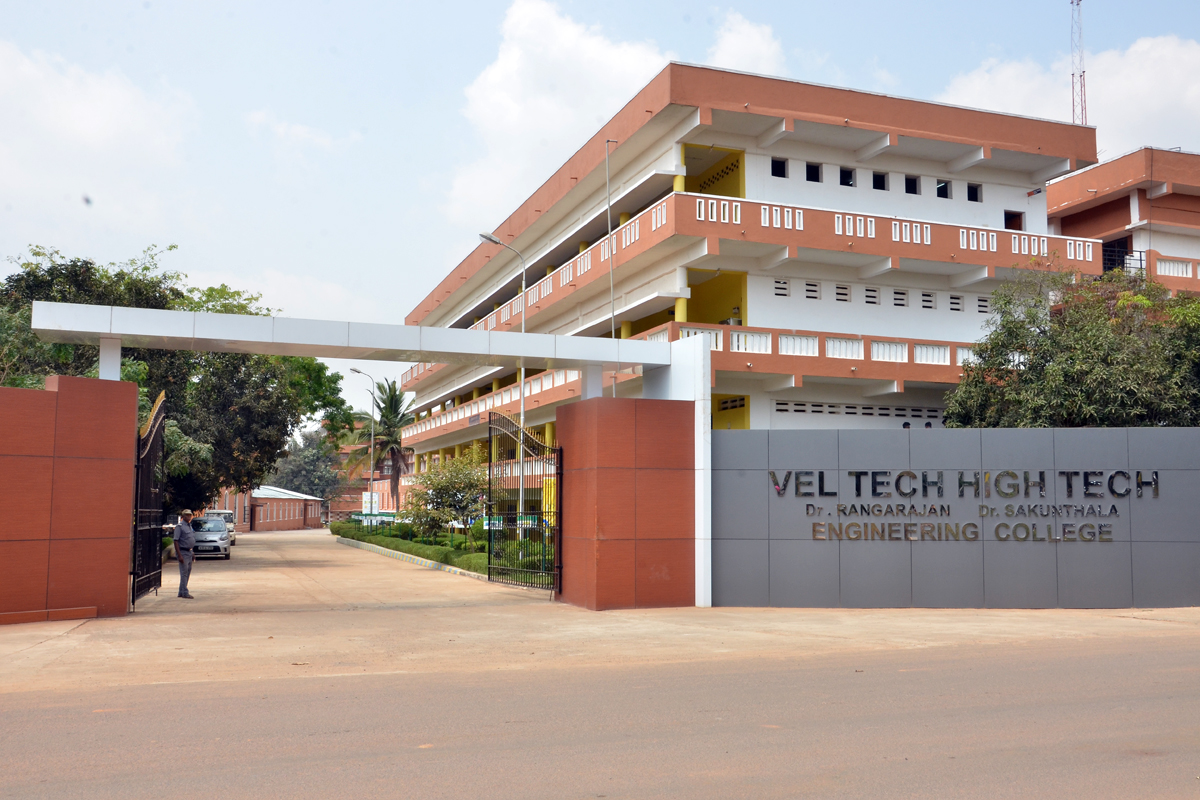
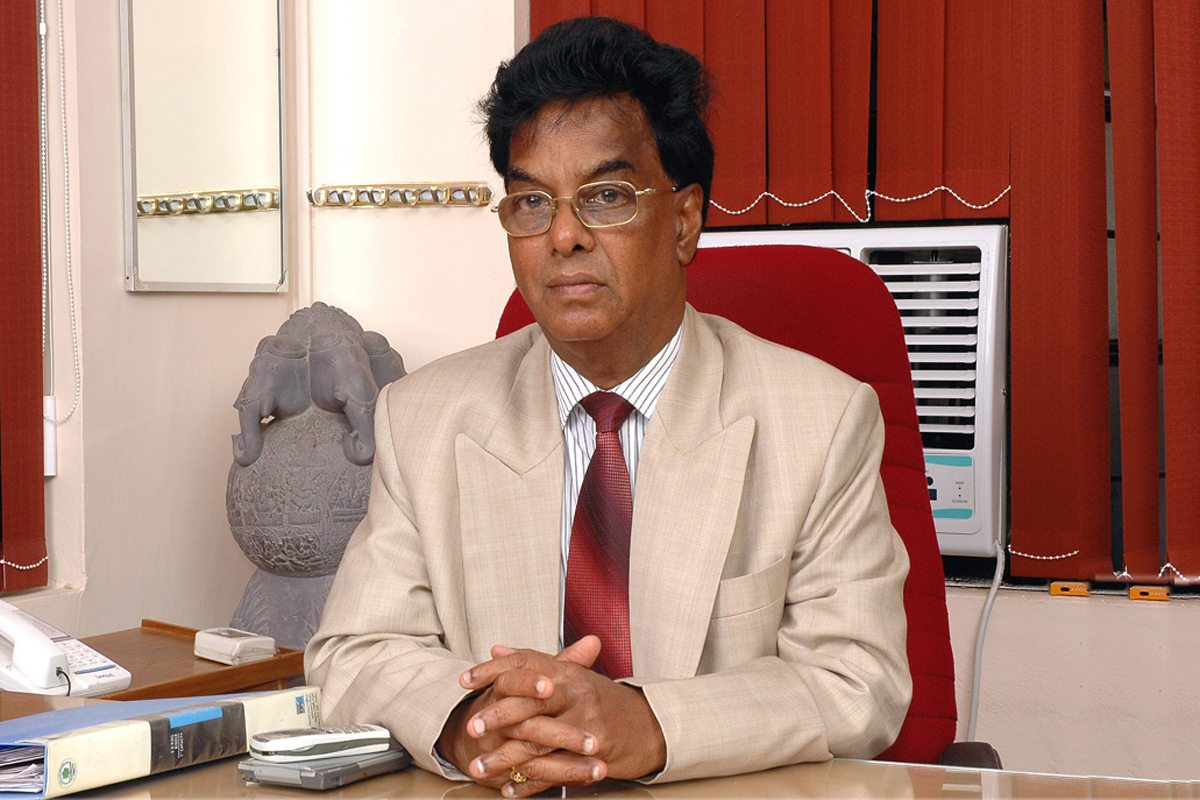 Col. Prof. Vel. Dr. R. Rangarajan