Human Resource PolicyPolicy Library
Human Resource
Policy
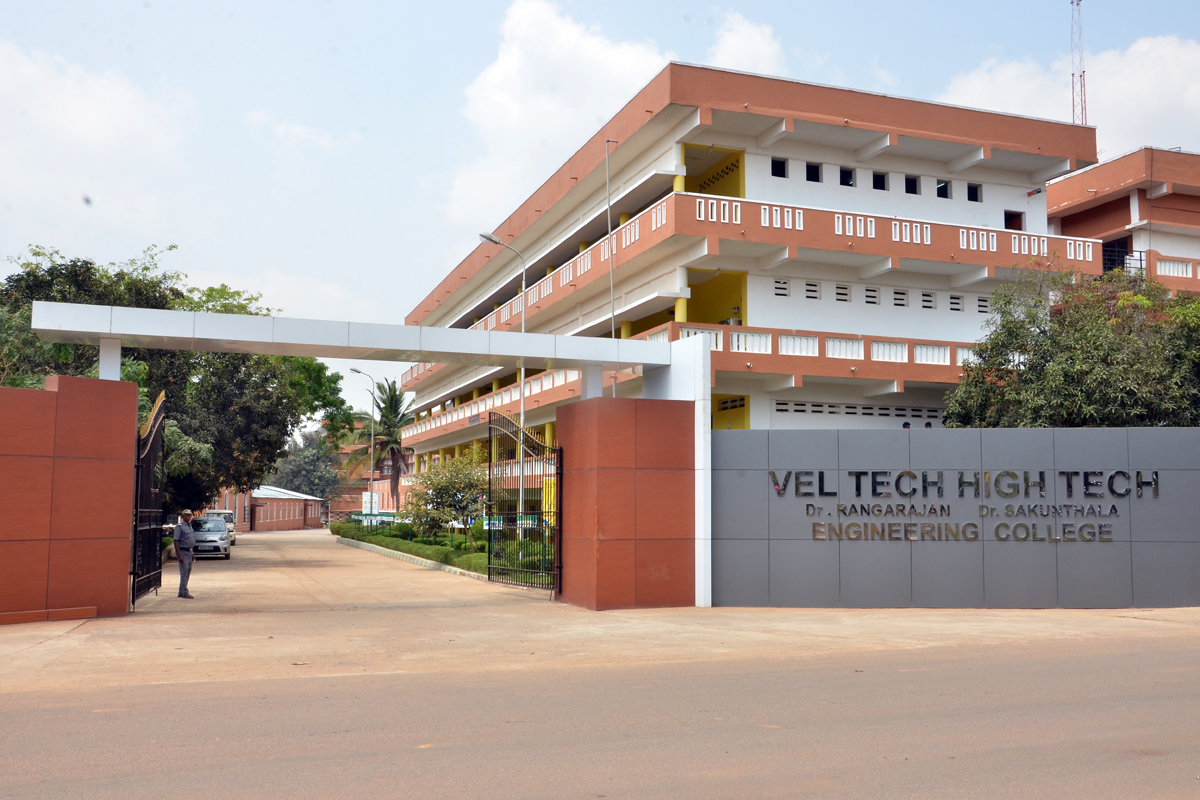
College campus

TABLE OF CONTENTS

ChapterParticularsSource Page
1Institute Vision & Mission1
2Introduction2
3Definitions3
4Screening & Recruitment of Faculty7
4.1 Screening; 4.2 Selection Committee; 4.3 Pay Fixation; 4.4 Promotion Policy; 4.5 Qualifications7–9
5Rules and Guidelines for the Teaching Staff10
6Responsibilities of the Principal11
7Responsibilities of the Dean Academics14
8Responsibilities of Controller of Examinations15
9Responsibilities of Head of Departments16
10Responsibilities of Teaching Faculty in the Department18
11Responsibilities of Placement & Training Officer19
12Responsibilities of Physical Director20
13Responsibilities of Librarian21
14Responsibilities of Technical Staff22
15Responsibilities of Accounts Officer23
16Duties and Responsibilities of Hostel Warden24
17Class Room Teaching27
18Laboratory28
19Test / Exam29
20Special Incentive to Faculty30
21Resignation / Termination of Service32
22Leave Rules33
23Conduct and Discipline35
24Repeal37
25Undertaking by the Member38
26Self Assessment Form for Faculty39

Chapter 1
Institute Vision & Mission

Vision

Pursuit of excellence in technical education to create civic responsibility with competency.

Mission

To impart the attributes of global engineers to face industrial challenges with social relevance. To indoctrinate as front runners through moral practices. To attain the skills through lifelong learning.

Chapter 2
Introduction

  1. These rules shall be called as Service Rules for the Vel Tech High Tech Dr. Rangarajan Dr. Sakunthala Engineering College.
  2. These rules shall be applicable to the employees of the Vel Tech High Tech Dr. Rangarajan Dr. Sakunthala Engineering College.

Chapter 3
Definitions

In the service rules, unless there is anything repugnant to the subject or context:

  1. Academic Year means year beginning with the 1st June of the calendar year and ending with May 31st of the following calendar year.
  2. Trust means R S Trust.
  3. College means Vel Tech High Tech Dr. Rangarajan Dr. Sakunthala Engineering College situated at #60, Vel Tech-Alamathi Road, Avadi, Chennai-600062.
  4. Designated Authority means any person duly authorized by the Management of the Trust or by the Principal.
  5. Employees means all persons in whole time and part time employment of the Trust/College namely Teaching Faculty, Technical Supporting Staff, Administrative Staff and Maintenance Staff, other than the labour force and contingent staff, whether permanent, officiating contract or temporary.
  6. He means either he or she.
  7. Non-Vacation Staff means all employees other than Vacation Staff.
  8. Principal means the Principal of Vel Tech High Tech Dr. Rangarajan Dr. Sakunthala Engineering College.
  9. Rules means the Service Rules hereunder.
  10. Service includes service as probationer, and period spent on any leave with pay and period spent on deputation, but excludes leave on loss of pay.
  11. Appointed to Post: A person is said to be appointed to a post when, in accordance with these rules or with the rules applicable at the time, he discharges for the first time the duties of the post or commences the probation, instruction or training prescribed therefor.
  12. Day means a calendar day beginning and ending at midnight but an absence from headquarters which does not exceed 24 hours is reckoned as one day at whatever hour the absence begins and ends.

Chapter 3
Definitions Continued

  1. Duty: A person is said to be on duty:
    1. When he is performing the duties of a post to which he is appointed or undergoing the probation, instruction or training prescribed for such post, provided that the performance of such duties is followed by confirmation;
    2. When he is absent from duty on authorized holidays or on casual leave taken in accordance with instructions regulating such leave issued by the BOM, having been on duty immediately before and immediately after such absence; or
    3. When he is, being a teacher, absent during vacation; or
    4. When he is attending conferences of learned societies on deputation by the College; or
    5. While he is on joining time; or
    6. When he is absent from headquarters or from his routine work attending to other College work not connected with his usual routine to which he has been specifically deputed in his official capacity either by the Principal or by the Executive Council; or
    7. When he is absent from headquarters or from his routine work in connection with college duties either remunerative or non-remunerative, provided the duties have been assigned by the Principal or by the Board of Management.
  2. Honorarium means a recurring or non-recurring payment granted to an employee of the College as remuneration for special or professional work.
  3. Member of a Ministerial Staff means a college employee whose duties are entirely clerical and any other class of employees specially defined as such by the Board of Management. The following employees of the college shall be classed as Ministerial Staff:
    1. Additional Controllers of Examinations.
    2. Assistant Controllers of Examinations, Assistant Controller of Accounts, Assistant Controller of Finance, Administrative and Accounts, Administrative and Accounts Assistants to Engineer.
    3. Secretary to the Principal.
    4. Public Relation Officer.
    5. Personal Assistant to Principal.
    6. Wardens in the Hostels.
    7. Statistical Assistant.
    8. Senior assistants, senior assistant accountants.
    9. Senior assistant, Stenographers.
    10. Junior assistants, stores clerks, store keepers, cashier.
    11. Data entry operator.
    12. Technical assistant (library).
    13. Telephone operators.
    14. Record assistants.

Chapter 3
Definitions Continued

  1. Officiate: A college employee officiates in a post when he performs the duties of a post on which another person holds a lien. The Board of Management may, if it thinks fit, appoint an employee to officiate in a vacant post on which another employee holds a lien.
  2. Permanent Post means a post carrying a definite rate of pay sanctioned without limit of time.
  3. Teachers of the College means teachers appointed by the College to give instruction or guide research in the College and constituent colleges.
  4. Temporary Post means a post carrying a definite rate of pay sanctioned for a limited time.
  5. Tenure Post means a permanent post which an individual employee may not hold for more than a limited period.
  6. Travelling Allowance means all allowances granted to an employee to cover the expenses which he incurs in travelling in the interests of the college or on college business.
  7. Transfer from one post to another: The appointing authority may transfer a college employee from one post to another.
  8. Provident Fund: Every full-time employee of the college holding a permanent appointment becomes a depositor in the college provident fund scheme in force from time to time.
    1. Teachers who have retired from government service and are appointed in the College shall not be eligible to become depositors to the provident fund.
    2. Every full-time employee including the Principal and teachers of the College, on confirmation shall, as a condition of service, become a depositor to the College contributory provident fund scheme in force from time to time.
  9. Work other than that of the office held by an employee:
    1. Remunerative: No full-time employee of the college shall undertake any remunerative work without the previous permission of the Board of Management or the Principal. Exception: In the case of teachers, the Principal may grant permission. No permission is required for publications embodying one’s researches or books of college standard.
    2. Honorary: No full-time employee of the college shall undertake any honorary work without the previous sanction of the Principal.
  10. Probation: No person shall be eligible for appointment as a permanent member of the college service without being on probation for the period prescribed by the rules governing appointment thereto or in the order of appointment.

Chapter 3
Definitions Continued

Suspension, Termination and Extension of Probation

  1. Suspension or termination of probation: Where the rules prescribe a period of probation for appointment as a full member of the staff, the appointing authority may, at any time before expiry of such period, suspend the probation of the probationer and discharge him from service for want of a post, or at its discretion terminate the probation of a probationer and discharge him from service without assigning reasons.
  2. Extension of probation: If within the period of probation a probationer fails to acquire the special qualifications or to pass the special tests, if any, prescribed in the rules or in the order of appointment, or fails to serve the period of probation satisfactorily, the appointing authority shall discharge him from service unless the period of probation is extended, such extension being granted for one year at a time. Any delay in the issue of an order discharging a probationer shall not entitle him to be deemed to have satisfactorily completed probation.

Seniority

  1. The seniority of an employee in a grade shall, unless he has been reduced to a lower rank as a punishment, be determined by the date of his first appointment to such grade. If any portion of service does not count towards probation, seniority shall be determined by the date of commencement of service which counts towards probation.
  2. The appointing authority may, at the time of passing an order appointing two or more persons simultaneously to a grade, fix the order of preference among them, and seniority shall be determined accordingly.
  3. Where the holder of any post in a grade is reduced to a lower grade, he shall be placed at the top of the latter unless the authority ordering such reduction directs that he shall take rank in such lower grade next below any specified member thereof.

Promotion

  1. No member of the college service shall be eligible for promotion from the post to which he was appointed unless he has satisfactorily completed his probation in that post.
  2. All promotions shall be made on grounds of merit and ability, seniority being considered only where the merit and ability are approximately equal.

Chapter 4
Screening & Recruitment of Faculty

4.1 Screening

  1. Recruitment is normally done twice in a year during April and November.
  2. The number of vacancies in the different cadres shall be communicated by the HOD with resolution of Departmental Committee based on student strength, existing faculty, resignations or terminations of staff members, to the management for information and approval.
  3. Advertisements for open positions are placed in leading newspapers, on digital platforms, and across social media.
  4. Screening of applications shall be done by the respective Screening Committee and forwarded to Selection Committee.
  5. HR will coordinate the entire process of conducting the interview with the knowledge of the Registrar.
  6. Applications received will be short-listed based on qualification and experience and the short-listed candidates will be called for personal interview and selection will be made on merit.
  7. Direct interview will be conducted. The Selection Committee shall be constituted by the Principal as per the guidelines approved by the BOM.

Recruitment Process Flow

Department Review MeetingVacancy PositionRecruitment Indent
New Recruitment / Vacancy / Performance AppraisalPrincipalHR Department
Application → Scrutiny of Application by Selection Committee → Eligible / Not Eligible
Interview Process by Selection CommitteePersonal Interview / Technical Interview / Demo ClassSelected / Waiting List / Not Selected
Verification of Documents → Appointment Order → Joining Report → File

Chapter 4
Selection, Pay Fixation and Promotion

4.2 Selection Committee

Board of Management delegates its power to Principal for constituting the Selection Committee for the appointment of Professors, Associate Professors and Assistant Professors. The following Selection Committee has been constituted:

CadreSelection Committee Composition
Professor
  1. Principal – Chairman
  2. A person nominated by the Principal
  3. Head of the Department / Chairman, Board of Studies, provided he / she is a Professor
  4. Three external experts nominated by the Principal, out of which at least two experts should be present, and one internal expert nominated by the Principal
Associate Professor
  1. Principal – Chairman
  2. A person nominated by the Principal
  3. Head of the Department / Chairman, Board of Studies, provided he / she is a Professor or Associate Professor
  4. Two external experts and one internal expert nominated by the Principal
Assistant Professor
  1. Principal – Chairman
  2. Head of the Department / Chairman, Board of Studies, provided he / she is a Professor or Associate Professor
  3. Two external experts and one internal expert nominated by the Principal

4.3 Pay Fixation

  1. Pay for selected candidates shall be fixed by the Selection Committee as per UGC Sixth Pay Commission norms for the respective post, and as approved by the Board of Management based upon qualification, experience and other achievements.
  2. Higher pay packages for exceptionally meritorious and well experienced candidates will be fixed by the Selection Committee subject to approval of the Principal.
CadrePay Band / AGP
Assistant ProfessorRs.15600 – 39100 + AGP Rs.6000
Associate ProfessorRs.37400 – 67000 + AGP Rs.9000
ProfessorRs.37400 – 67000 + AGP Rs.10000

4.4 Promotion Policy

Faculty who are eligible for promotion as Associate Professor / Professor may apply to the regular Selection Committee. The Selection Committee may consider and promote based on the criteria mentioned.

Promotion Criteria
Eligibility; Experience as per AICTE & Anna University; Seniority and Dedication; Additional Qualification Obtained; Research Publications; Participation in Faculty Development Programs.

4.5 Qualifications

Recruitment of faculty members is done based on the norms prescribed by AICTE / Anna University for various cadres. The fixation of seniority or additional increment for past service in institutions / industries is done based on the norms prescribed by AICTE / Anna University.

Chapter 5
Rules and Guidelines for the Teaching Staff

5.1 Hours of Work

The regular working hours for faculty members shall be 8:00 AM to 3:30 PM with a lunch break of one hour. Depending upon the exigencies of work, staff members concerned are expected to be available beyond the office hours indicated above. 1st and 3rd Saturdays and all Sundays are normal holidays in a month.

5.2 Attendance

All staff members are required to record their attendance through biometric provided at the Principal office in the morning when they come in and in the evening when they go out of college. A maximum of two leave in a calendar month are allowed.

5.3 Dress Code

All male members of the staff are required to wear full trousers with full-sleeved shirts tucked in and are expected to be in shoes. The lady members of the staff are required to be dressed in saree. All have to wear the ID card conspicuously around the neck, in a manner readable by the others.

Chapter 6
Responsibilities of the Principal

  1. Providing leadership to the College.
  2. Ensuring efficient management of educational and administrative affairs of the College, including management of assets, finances, facilities and other resources.
  3. Responsible for strategic planning and policy development of the College.
  4. Addressing quality management, quality research, quality human capital, quality teaching and learning, international linkages, quality infrastructure, and college ranking.
  5. Exercising all powers and functions vested in him/her under the various provisions of the MOA.
  6. Exercising such powers and functions vested in or delegated to him/her by the various authorities of the College.
  7. Exercising and discharging such powers and duties as are conferred on him/her under the Statutes, Ordinances and Regulations of the College.
  8. Delegating any of his powers or duties to any Officer of the College.
  9. Inspecting all departments of the College.
  10. Instituting enquiry in respect of any matter concerning the College.
  11. Considering all proposals which require sanction of the Board of Management.
  12. Inviting eminent persons to deliver Endowment / Extension Lectures and sanctioning remuneration.
  13. Deputing employees to attend seminars, conferences or workshops within India and sanctioning TA, DA, registration fee, etc.
  14. Deputing employees to attend any work connected with the College and sanctioning TA, DA, etc.
  15. Deciding matters relating to scholarships, fellowships and freeships instituted by the College.
  16. Transferring administrative officers from one office / branch / wing / department to another.
  17. Ordering retirement of employees on attaining superannuation and sanctioning gratuity in accordance with rules.
  18. Sanctioning installation of telephones, computers, intercommunication systems, etc. at residences of officers, offices and institutions of the College.

Chapter 6
Responsibilities of the Principal Continued

  1. Granting permission to employees for attending meetings of committees constituted by Government, UGC or other Public Bodies and treating such absence as Other Duty.
  2. Appointing paper setters, examiners, adjudicators, experts from recommended panels received from Boards of Studies and publishing the results of College Examination after evaluation.
  3. Appointing committees on any matter relating to the College or its Colleges and sanctioning appropriate honorarium to members.
  4. Acting as the principal executive officer of the College and exercising general supervision and control over the affairs of the College; mainly responsible for implementation of the decisions of all authorities of the College.
  5. Serving as Ex-Officio Chairman of the Board of Management, Academic Council, Finance Committee, Planning & Monitoring Board and Selection Committees.
  6. Convening or causing to be convened meetings of the various authorities of the College.
  7. If immediate action is called for on any matter, exercising any power conferred upon any authority of the College under the Memorandum of Association, Regulations, Rules and Bye-Laws, taking such action, and reporting to the authority concerned on the action taken.
Provided that if the authority concerned is of the opinion that such action ought not to have been taken, it may refer the matter to the Chairman whose decision thereon shall be final. Provided further that if any person in service of the College is aggrieved by the action taken by the Principal, he/she shall have the right to appeal against such decision to the Board of Management within 30 days from the date on which such action is communicated to him/her and the Board of Management may confirm, modify or reverse the action taken by the Principal.
  1. Ensuring that the Memorandum of Association, Regulations, Rules and Bye-Laws of the College are duly observed and implemented with all necessary powers in this regard.
  2. All powers relating to proper maintenance of discipline of the College shall be vested in the Principal.
  3. Re-delegating some powers to subordinate officers with concurrence and approval of the Board of Management.
  4. Exercising all other powers delegated by the Board of Management.
  5. Exercising such other powers and performing such other functions as may be prescribed by Rules and Bye-Laws.
  6. Reporting to the Chairman.

Chapters 7 and 8
Responsibilities of Dean Academics and Controller of Examinations

Chapter 7 – Responsibilities of the Dean Academics

  1. The Principal will appoint / nominate one senior professor as the Dean Academics.
  2. He shall be assisted by a Deputy Dean nominated by the Principal from among the teaching faculty for a specific period.
  3. Dean Academics shall look after academic regulations relating to all courses of study offered by the College.
  4. He shall arrange Board of Studies meetings of all departments and communicate resolutions to concerned bodies.
  5. Dean Academics shall be responsible for academic programmes, timetable and evaluation schedule, and monitoring of teaching / instruction.
  6. Dean Academics will be responsible for outcome based education implementation, innovative TLP, monitoring the effectiveness of attendance system, web updation system, mentoring system, training system and stable e-governance.
  7. Dean Academics will be responsible for effective utilization of infrastructure such as library and laboratories.
  8. Dean Academics will be responsible for Human Resource recruitment and development.

Chapter 8 – Responsibilities of Controller of Examinations

  1. Controller of Examinations is appointed by the Principal to look after the entire process of examinations and results processing.
  2. When the office of Controller of Examinations is vacant or when he/she is unable to perform duties due to illness or absence, duties shall be performed by the Principal or by such person as the Principal may appoint.
  • Exercise general supervision over conduct of college examinations in a disciplined and efficient manner.
  • Arrange for paper setting and printing with strict secrecy.
  • Arrange for evaluation and re-evaluation of answer sheets.
  • Arrange for declaration of all results.
  1. He/she shall constantly review the examination system to enhance impartiality and objectivity and any other matter connected with examinations assigned by the Principal.

Chapter 9
Responsibilities of Head of Departments

  1. Coordinating activities of faculty and supporting staff in the department to offer quality education and achieve desired vision and mission of the college.
  2. Planning and monitoring overall departmental activities.
  3. Monitoring time schedule for syllabus coverage, internal tests and opening/closing of semesters.
  4. Arranging departmental requirements such as staff, equipment, library books, textbooks and other infrastructure facilities.
  5. Preparing and submitting annual department budget to the Principal.
  6. Developing, installing and maintaining department labs.
  7. Convening departmental meetings.
  8. Identifying brilliant and talented students and encouraging innovative projects; identifying weaker students and arranging remedial / special classes.
  9. Counseling and guiding students.
  10. Identifying and encouraging faculty to apply for research projects, carry out consultancy work, publish papers in national and international journals/conferences with high impact factors and carry out activities successfully.
  11. Assisting Principal and Dean/Director Academics in administrative and other matters.
  12. Reporting periodically to Principal on academics, administration, discipline, research etc.
  13. Organizing and participating in seminars and continuing education programmes and arranging syllabus revision in coordination with the College.
  14. Becoming members in professional organizations.
  15. Taking necessary steps to develop industry institute interaction.
  16. Encouraging students to attend and present papers in conferences and publish papers in journals.
  17. Arranging continuing education programmes for practicing engineers and technical staff of industry.
  18. Checking course files of teachers and suggesting corrective measures.
  19. Maintaining all records as stipulated by NBA / NAAC / ISO for Accreditation.
  20. Forwarding performance appraisal of all faculty in the department with remarks and submitting to Principal every year along with self assessment form.

Chapters 10 to 12
Faculty, Placement Officer and Physical Director

Chapter 10 – Responsibilities of Teaching Faculty in the Department

  1. Teaching load will be allotted by HOD after taking into account Faculty Member’s interests.
  2. Prepare lesson plan in advance incorporating teaching methods.
  3. Prepare assignment topics in compliance with course outcome, PEOs and POs.
  4. Identify slow learners and arrange remedial classes.
  5. Prepare quality course material from better sources.
  6. Keep more academic interactions with students.
  7. Mentoring students is a part of responsibility.
  8. Be a good researcher and cultivate research as part of academic responsibility.
  9. Motivate students to involve in curricular and co-curricular activities.
  10. Take part in sound development of students to become employable / entrepreneur.
  11. Assist HOD / Dean / Authorities in administration of department / College.

Chapter 11 – Responsibilities of Placement & Training Officer

  1. Look after training and placement activities of students.
  2. Maintain close liaison with industry for placement of students.
  3. Work with Coordinator, Industry Institute Interaction for organizing lectures by professionals from industry.
  4. Collect feedback from companies coming for placement.
  5. Arrange training programmes for soft skills and HR and technical skills using institutional and external expertise.
  6. Organize entrepreneurship workshops.
  7. Prepare placement brochures of departments.
  8. Invite prospective companies for campus recruitment.
  9. Register students for placement with prescribed qualifications.
  10. Arrange facilities required on the date of interview.
  11. Collect appointment letters and distribute them to selected students.
  12. Arrange industrial visits and in-plant training.
  13. Achieve maximum possible placements for students.
  14. Guide students on interview techniques, group discussion and aptitude tests.
  15. Periodically conduct IQ tests.
  16. Arrange personality development workshops.
  17. Notify various competitive examinations.
  18. Guide students wishing to pursue higher education in India or abroad.
  19. Organize Faculty Development Programs by industry experts with academic staff.
  20. Sign MoUs with industries for student training, FDP, guest lecture etc.

Chapter 12 – Responsibilities of Physical Director

  1. Coordinate staff of physical education department for effective functioning.
  2. Plan and schedule student accessibility to sports/games equipment, grounds and facilities.
  3. Prepare and submit annual budget to Principal.
  4. Organize and conduct college level and state level sports/games.
  5. Attend inter-college meetings regarding physical education.
  6. Arrange training for physical directors in advance programs.
  7. Suggest changes and developmental activities in sports/games to students.
  8. Ensure discipline among students participating in sports and games.
  9. Arrange inter-departmental sports and inter-college competitions.
  10. Assist HODs in maintaining discipline in campus.

Chapters 13 to 15
Librarian, Technical Staff and Accounts Officer

Chapter 13 – Responsibilities of Librarian

  1. Responsible for overall operating efficiency of the library.
  2. Collection of indents from departments and processing for procurement.
  3. Purchase and maintenance of books.
  4. Purchase of suggested new journals and renewal of subscriptions.
  5. Coordination and management of library activities including staff.
  6. Introduction / maintenance of library automation and digitization.
  7. Selection and recommendation of staff for further training.
  8. Preparation of annual budget of the library.
  9. Maintenance of good inter-departmental relationship for better coordination.
  10. Collection and preservation of statistical records related to library.
  11. Administration of library records.
  12. Furnishing information on matters relating to library.
  13. Updating records, books and computers.
  14. Removing obsolete book materials in consultation with the concerned department, securing the soiled through rebinding, and binding important back volumes.
  15. Ensuring maximum utilization of library facilities.
  16. Maintenance of discipline and decorum inside library.
  17. Planning for changes and reorganization whenever need arises.
  18. Arranging annual stock verification.

Chapter 14 – Responsibilities of Technical Staff

  1. Assist in installation, operation and maintenance of laboratory equipment and calibrations.
  2. Assist in scheduling and conducting practical and drawing classes and help students with tools/materials/equipment.
  3. Help in indenting and purchasing stores and consumables for laboratories and workshops.
  4. Help faculty in research, consultancy and testing works and assist students in mini/major projects.
  5. Assist faculty in design, fabrication and computer work.
  6. Help supply of water and electricity in campus.
  7. Assist in operation of telephones, intercom, internet and audio visual aids.
  8. Take specific responsibilities during functions, workshops and seminars as specially assigned.

Chapter 15 – Responsibilities of Accounts Officer

  1. Planning, organization and maintenance of accounts of College, hostel and general stores.
  2. Maintenance of imprest cash accounts and advances.
  3. Maintenance of accounts of research projects sponsored by AICTE, DST, CSIR etc.
  4. Auditing responsibility in respect of internal audit once a month and external audit once a year.
  5. Maintenance of deposits and refunds with records.
  6. Preparation and filing of income tax statements for College staff.
  7. Settlement of bills through and from Principal’s office.
  8. Preparation of monthly salary statement.
  9. Assisting Principal in preparation of annual budget.
  10. Ensuring efficiency of accounting section and management of accounting staff.

Chapter 16
Duties and Responsibilities of Hostel Warden

  1. Allot rooms to students and maintain a list of students with permanent addresses of parents/guardians and other required information.
  2. Consider welfare and discipline among residents and maintain daily records of resident students, present/absent status and reasons for absence.
  3. Ensure that no ragging takes place in hostels and maintain a ragging-free hostel.
  4. Oversee health, hygiene and general life of students in hostel and ensure observance of regulations and discipline.
  5. Report to Principal cases of misbehavior, indiscipline and illness of students residing in hostel.
  6. Safe custody and maintenance of hostel properties entrusted for repairs within allotted funds and norms.
  7. Right to inspect all rooms of hostel.
  8. Administrative control over staff assigned to hostel.
  9. Available in Hostel Office every day at specified hours for official business and resident student problems.
  10. Responsible for proper upkeep and maintenance of hostel properties under charge.
  11. Maintain and check Resident Student's Register and Guest Room Register.
  12. Take disciplinary action against resident student keeping unauthorized guest/material in room.
  13. Report defaulting student to enquiry protocol committee and conduct enquiry as per protocol.
  14. Periodically verify hostel furniture and fittings and take action for repair/replacement/additional furniture.
  15. In case of misuse/damage of hostel property by students, impose necessary fines and withhold hostel deposit if required.
  16. Ensure maintenance of discipline in and around hostel.
  17. Submit self compliance report regularly.
  18. Give wakeup call by 6 AM.
  19. Ensure night plumber runs motor properly and water tank is full to avoid water shortage.
  20. Distribute morning newspaper to all rooms.
  21. Take frequent rounds to ensure students get ready on time.
  22. Ensure all students have left for college in time.
  23. Ensure only genuine sick students are in hostel and take care of them.
  24. Inform HOD of absenteeism and record names of absentees in register.

Chapter 16
Hostel Warden Continued

  1. Fill the incidence report.
  2. Take feedback of students regarding hostel maintenance.
  3. Rectify all reported issues.
  4. Verify housekeeping sheets and ensure all rooms have been cleaned.
  5. Ensure corridor dustbins have been cleared.
  6. Ensure PD and indoor games / library hour are maintained with staff.
  7. Ensure staff available for canteen monitoring.
  8. Ensure linen of the room washed periodically.
  9. Ensure good dhobi facility.
  10. Ensure good shop facility.
  11. Display movie as per student choice on weekends.
  12. Conduct student committee meeting for canteen, sports, education and entertainment.
  13. Inform mentor when student falls ill.
  14. Visit each room physically and take attendance on seeing the student only.
  15. Make rounds at 11.30 PM and 5.30 AM and ensure students are in room as per hostel records.
  16. Be aware of academic schedule and collect copy from academic planning.
  17. Switch off water cooler from 11.00 PM to 6.00 AM and on regular working day switch off floor-wise cooler at 9.00 AM and switch on at 3.00 PM.
  18. Make rounds during study hours 8.30 to 10.00 PM.
  19. Ensure all water heaters are in working condition.
  20. Ensure hot oven is working in kitchen.
  21. Attend defaulting issues – Protocol 3.
  22. Hostel monitoring committee will meet once in 15 days to discuss issues as per Protocol 2.
  23. Collect hostel master ledger for academic year by May end for existing students and by end of July for new admissions. Hostel ML with student information and latest full size photo must be collected before academic year.
  24. Issue out pass to student after confirmation with parents.

Chapters 17 to 19
Teaching, Laboratory and Test / Exam

Chapter 17 – Class Room Teaching

  1. Once the subject is allotted, the Faculty Member should prepare lecture hour-wise lesson plan for theory/tutorial/lab as per academic calendar.
  2. Faculty Member should get lesson plan and course file approved by HOD and Principal. Course file consists of preface, CEO and CO, syllabus, model question paper, notes, handouts, test/exam question papers, two model answer scripts for each test/exam, assignments, minute paper and feedback analysis report.
  3. Faculty Member’s Diary must be regularly updated and put up for inspection every month by HOD / Principal.
  4. Faculty Member should go to class at least 5 minutes before and enter without delay when bell rings.
  5. Faculty Member should engage full 50 minutes as per time table and should not leave class early.
  6. Faculty Member should use PowerPoint Presentation, models, smart boards etc. as teaching aids.
  7. Encourage students to clarify doubts and ask questions.
  8. Get feedback from students and act / adjust teaching appropriately.
  9. Take care of academically backward students and conduct special classes.
  10. In problem-oriented subjects, conduct regular tutorials and hand over tutorial problems at least one week in advance.
  11. Interact with class coordinator or counselor and inform about habitual absentees, academically backward students and objectionable behavior.
  12. Aim for 100% pass results and work accordingly.
  13. Motivate students and bring out creativity / originality.
  14. Test papers must be corrected within three days and students allowed to verify valuation. Marks are to be submitted to HOD for forwarding to Principal with remarks.

Chapter 18 – Laboratory

  1. Faculty Member going for laboratory class must perform experiments personally and be satisfied with results before asking students to conduct experiments.
  2. Whenever possible, additional experiments to clarify or enlighten students must be given.
  3. Lab observations/records must be corrected then and there or at least by next class and students instructed.
  4. Laboratory manuals shall be prepared and maintained by lab in-charge.
  5. Maintenance and calibration of instruments/equipment shall be carried out periodically.
  6. Licenses of software packages shall be renewed.

Chapter 19 – Test / Exam

  1. Faculty members having invigilation duty should report to COE at least half an hour before commencement.
  2. During invigilation, Faculty Member should continuously move around and should not sit for prolonged time; he/she should watch closely to prevent malpractice.
  3. Whenever malpractice is noticed, Faculty Member should get written statement from student and inform Chief Superintendent, Coordinator and HOD concerned in case of Unit Test / Mid Term Test.
  4. Faculty Member should be fair and impartial in awarding internal marks or selecting outstanding students strictly as per norms, without bias on region, language, religion, caste, status of parents or personal relations.

Chapter 20
Special Incentive to Faculty

Special incentive is given as per UGC Sixth Pay performance self appraisal 2010 for publication in journal / conference / publication of books / R&D.

20.1 National Events

  • Faculty are encouraged to participate / present quality publications and college will provide deputation for presenting papers accepted for presentation and publication in proceedings.
  • Selection based on peer review of full paper; evidence to this effect should be produced.
  • Event registration and TA/DA as applicable will be provided.
  • Absence will be treated as on duty.
  • Preference will be given to those invited to chair sessions.

20.2 International Events

  • Deputation only for presenting papers selected after peer review of full paper for presentation and publication in proceedings, with evidence.
  • For registration fee, 100% TA and DA will be given to each teacher. Paper presenters should return and serve the institution for at least two years; otherwise sanctioned amount is to be refunded.
  • Preference will be given on recommendation of HOD/Dean and approval from Principal.
  • In case of funded projects, conditions may be relaxed and sponsored project funds may be used with prior approval of Principal and Management.

20.3 Funded Projects

  • 5% of the value of research project will be given to investigator from the college.
  • 50–70% of consultancy will be given to faculty involved in consulting work.

20.4 Publication of Research Papers

Incentive will be given to the author of a research publication with Scopus index.

20.5 Publication of Textbooks

For every good textbook published in relevant subjects, authors of the book will be given an incentive of Rs.10,000/-.

Chapter 21
Resignation / Termination of Service

  1. The staff shall tender resignation by giving two months’ notice or two months’ salary in lieu thereof. The notice shall be co-terminus with the end of the semester / academic year.
  2. The Principal has power to terminate services of a member of the College for any of the following reasons:
    1. Serious misconduct and willful negligence of duty.
    2. Gross insubordination.
    3. Physical or mental unfitness.
    4. Participation in any criminal offence involving moral turpitude.
  3. In such termination cause, rule 21.1 shall not be applicable and the faculty/staff member shall not be eligible for terminal benefits.
  4. Newly appointed faculty/staff should serve at least one full academic year. No faculty/staff member is eligible to draw vacation salary if he resigns during vacation period.

Chapter 22
Leave Rules

Leave Procedure
  • All types of leave shall be availed only after obtaining formal approval.
  • Faculty members must apply with respective leave forms to the respective Dean, HOD or Section Head before commencement of leave.
  • Leave shall be approved by the concerned authority before commencement.
  • If leave is denied or postponed, reasons shall be documented and communicated before commencement, provided application was submitted at least two days in advance.
  • To extend leave, employee shall apply through online portal / forms before ongoing leave expires.
  • In urgent cases, application shall detail the nature of urgency.
  • Long leave extension requests must reach Principal office at least 15 days before re-joining date.
  • Faculty shall delegate teaching/other responsibilities to colleagues before applying for leave and detail arrangements in application.
  • For teaching faculty, more than 2 days leave in a month during academic period requires prior approval from Principal.
Casual Leave (CL)
Academic Year26th June to 25th June of the succeeding year.
Entitlement12 days/year, added at beginning of Academic Year (July to June). Newly appointed employee receives pro-rata CL.
Carry ForwardCL shall not be carried over.
Minimum / MaximumMinimum half day; maximum 5 days at a time.
CombinationCL shall not be combined with any other type of leave.
HolidaysIntervening holidays will not be reckoned as CL. Holidays can be prefixed and/or suffixed.
Total AbsenceTotal absence including holidays shall not exceed 10 days unless approved by Principal on genuine reasons.

Chapter 22
Leave Rules Continued

Earned Leave (EL)
Entitlement12 days in a calendar year: 26th December to 25th December of succeeding year.
Credit6 days credited in Phase I by 26th December and 6 days in Phase II by 26th June. Newly appointed employee receives pro-rata EL.
ApplicationMust be applied 2 working days in advance.
Minimum / MaximumMinimum 1 day. No maximum limit.
HolidaysIntervening holidays will be reckoned as EL; prefix and/or suffix holidays will not be reckoned as EL.
Encashment RulePaid with December salary based on present drawn Basic + DA. Unavailed EL is calculated after adjusting Medical Leave, Maternity Leave and Leave on Loss of Pay availed from 26th December to 25th December. In case of death, encashment shall be paid to legal heir.
Medical Leave (ML)
NaturePaid medical leave granted only for hospitalisation-level conditions.
CombinationOnly EL can be combined.
MinimumMinimum 3 days.
Eligibility<3 years: Nil; ≥3 to <5 years: 3 days; ≥5 to <10 years: 7 days; ≥10 years: 10 days.
AccumulationMedical Leave will be added every year as per eligibility and maximum 180 days may be accumulated.
DocumentsRequires certified medical documents with discharge summary countersigned by a doctor. Sudden sickness must be communicated.
Holidays / MaximumIntervening holidays count as ML; prefix/suffix allowed. Maximum 90 days. Extension of 90 days admissible after reporting to institution. Beyond that it shall be considered disruption in service and incumbent will be treated as a new employee.

Chapter 22
Leave Rules Continued

Maternity Leave (Mat. L)
MaximumMaximum 90 days, pre- and post-confinement.
ExtensionAdditional 90 days maximum after reporting to institution; beyond that it shall be considered disruption in service and incumbent will be treated as a new employee.
Paid Leave2 years of service: 2 months paid; ≥3 years: 3 months paid.
ConditionsMust sign a 1-year bond post-leave. Applicable only for two children. <2 years: Leave on Loss of Pay. Payment will be disbursed only after employee resumes duty following maternity leave period.
Leave on Duty (OD)
Institute-related WorkMaximum 15 days/year. Prior approval required. Activity report to Principal. For teaching faculty, OD for project and consultancy activities shall be applied with approval of Principal. For institute-related requirements, 15 days may be exceeded with approval of Principal.
Anna University Examination ActivitiesOD may be applied for valuation, invigilation, examiner for practical etc. Maximum 5 days in each semester. In exceptional cases it may be exceeded, but total ODs shall not exceed 10 days in an academic year. Prior approval required from Principal. Attendance certificate to be submitted.
Special Leave (SL)
Academic Year26th June to 25th June of succeeding year.
Entitlement12 days/year, added at beginning of Academic Year.
PurposePrior approval required with proof. It can be availed for academic activities such as FDP of 6 days and above, conference presentation/participation, workshop, seminar, external BoS, RAC, DC Member, Resource Person, Chair Session: 12 days.
Return RequirementPresented/Participated/Attended certificate must be submitted after return.
Special Case12 days of Special Leave may be exceeded for training programmes deputed by Deans with approval of Principal.

Chapter 22
Leave Rules Continued

Compensatory Off / Leave
ApplicabilityApplicable for holiday duties only.
Time LimitTo be availed within sixty days.
Working DurationFaculty members are required to maintain regular working hours/duration to claim full-day or half-day compensatory leave.
Examination DutyAs a special case, teaching faculty who have reported to the university either FN or AN or both sessions for semester-end examinations shall claim one day Comp-Off with approval of CoE and Principal.
Outside Campus DutiesFaculty shall claim Compensatory Off Leave for duties allotted outside campus during holidays with approval of Principal.
RestrictionNot applicable to administrators.
Vacation Leave (VL)
CombinationAny leave cannot be combined with vacation.
AttendanceMust attend duties before commencement of vacation and next day to end of vacation.
Comp-OffWorked on vacation days shall not be eligible for Comp-Off.
Faculty EligibilityOne-year service + 75% physical attendance during preceding semesters. 2 weeks in winter (end of Odd / Summer Sem – 14 days) and 2 weeks in summer (end of Even / Winter Sem – 14 days).
DenialLeave may be denied if services are required, applicable only for administrators. In such cases, denied days shall be converted to Earned Leave at ratio 3:1.
Long Leave on Loss of Pay
EligibilityEmployees who have completed 3 years of continuous service may be sanctioned one year leave without pay for personal commitments or higher studies.
BondEmployees shall execute a service bond agreeing to serve for a period equivalent to actual duration of leave availed.
Non-ComplianceIn event of non-compliance with bond conditions, employee shall be liable to pay three months’ salary as compensation for loss incurred by the Institute during absence.

Chapter 23
Conduct and Discipline

23.1 Conduct

  1. Every employee shall maintain absolute integrity and devotion to duty and do nothing unbecoming of an employee of the College.
  2. Every employee shall abide by rules and regulations of the College and all orders and directions of superior authorities.
  3. Every employee shall extend utmost courtesy and attention to all persons dealt with in the course of duties.
  4. Every employee shall promote the interest of the College and shall not act prejudicially thereto.
  5. No employee shall be a member of or associated with any political party or organization taking part in politics, nor assist political movement or activity.
  6. No employee shall join or continue membership of an association whose objectives or activities are prejudicial to sovereignty of India, public order or morality.
  7. No employee shall engage directly or indirectly in any trade or business or undertake other employment. For honorary social, charitable, literary, artistic or scientific work, prior permission is required.
  8. Employee shall strictly abide by laws relating to intoxicating drink or drug and shall not be under the influence during duties.
  9. Every employee shall maintain strict secrecy regarding College affairs and affairs of constituents and shall not divulge confidential information unless compelled by superior officer in discharge of duties.
  10. No employee shall, without prior permission of Principal, engage in trade/business/adventure by himself or through family or seek outside employment or office while on duty or leave.
  11. No employee shall enter partnership or accept any fees, endowment or commission from any party other than College except with prior permission of Principal.
  12. An employee shall not solicit or accept gifts from a constituent of the College or subordinate employee, except official gifts/grants/donations received in discharge of duties for the College.

Chapter 23 Continued, Chapter 24 and Chapter 25

23.2 Discipline

  1. The Principal or competent authority shall place an employee under suspension when disciplinary proceedings are contemplated or pending, or a criminal case is under investigation, inquiry or trial.
  2. An employee detained in police or judicial custody for more than 48 hours or sentenced to imprisonment exceeding 48 hours and not forthwith dismissed/removed/compulsorily retired shall be deemed suspended from date of detention/conviction by order of Principal until further orders.
  3. An order of suspension made or deemed to have been made shall continue until modified or revoked by competent authority.
  4. Where a teaching or non-teaching staff member commits misconduct in discharge of duties, the Principal may award punishment such as warning, censure, withholding of increment with or without cumulative effect after enquiry by committee constituted by Principal.

Chapter 24
Repeal

When these Rules come into force, the existing Service Rules stand repealed.

Chapter 25
Undertaking by the Member

Every member of the faculty should carefully read and understand the above “Duties and Responsibilities” and undertake to abide by them. As a mark of such commitment, the member at the time of joining the service should sign and give undertaking as given below:

“I have read and understood all the rules above and agree to abide by them without any lapse. I also understand that in case of non-compliance with any of the above I will be relieved from the employment of Vel Tech High Tech Dr.Rangarajan Dr.Sakunthala Engineering College”.

Signature:

Name & Designation:

Date:

Chapter 26
Self Assessment Form for Faculty

Annual Performance Based Faculty Appraisal System

Academic Year2025-26
Name of the Department
Personal Details
Name of the faculty with ID
Highest qualification and year obtained
Designation
Date of joining
Designation at the time of joining
Significant Achievements

For Office Use Only – Summary of Appraisal

CategoryEssentialDesirable
Teaching-Learning and Evaluation contribution
Professional, Co-curricular and Extension Activities
Research, Consultancy and Development
#Scopus#Web of Science (WoS)OthersTotal#PatentRecommended / Not Recommended
Book / Book Chapter / ConferenceJournalBook / Book Chapter / ConferenceJournalFiledPublishedGranted

Chapter 26
I. Teaching-Learning and Evaluation Contributions

A. Essential

Please refer the rubrics to fill the table.

CriteriaFacultyHoDRemarks by Committee
1. Classes (L T P) conducted with respect to allotted
2. Continuous and Semester end Evaluation duties (invigilation, evaluation, web updation)
3. Project guidance
4. Course portfolio Management (Course file, course coordinator, course assessment and observations)
5. Performance (Formal Feedback, Results, CO attainment)

B. Desirable

CriteriaFacultyHoDRemarks by Committee
1. Adaptation of modern teaching methods appropriate to the Course
2. Learning resource generation and distribution
3. Continuous Internal Assessment (question paper and assignment) quality and relevance
4. Contributions in designing open ended laboratory experiments
5. Offering/delivering special classes for students with varied learning aptitude

Chapter 26
II. Professional, Co-curricular and Extension Activities

A. Essential

Please refer the rubrics to fill the table.

CriteriaFacultyHoDRemarks by Committee
1. Membership in Professional bodies and organizing / attending events conducted by professional bodies
2. Attending Faculty development/refresher program
3. Collaboration with faculty/students from other institutions or Industry/Society
4. Contributions in Curriculum / course design and updation
5. Contribution in institutional level co-curricular activities (Tech festival, NSS, NCC etc.)
6. Mentoring students towards studies, career, attitude etc. and interacting with parents

B. Desirable

CriteriaFacultyHoDRemarks by Committee
1. Contributions to Newsletters / Magazines (institution or otherwise)
2. Resource Person / Chairing session / Reviewer in conferences, seminars, workshops organized
3. Offering / delivering career guidance programs / courses
4. Contributing to institutional / department governance and administration

Chapter 26
III. Research, Consultancy and Development

A. Essential

Please refer the rubrics to fill the table.

CriteriaFacultyHoDRemarks by Committee
1. Publishing research findings in indexed Journals
2. Conducting sponsored research / Consultancy
3. Guiding PhD / Research scholar / PG Student

B. Desirable

CriteriaFacultyHoDRemarks by Committee
1. Publishing in high impact factor journals
2. Disseminating research findings in international conferences
3. Publishing books / chapters / monographs
4. Obtaining IPR
5. Mentoring students to participate in project / design contests / industry internship
Submitted by
(Signature of the Faculty)
Verified By
(Head of the Department)
Recommended by
(Principal)

Chapter 26
HoD's Observation

Name of the Faculty
HTS No
Department
Designation
S.NoCriteriaSCWD
1Contribution to admission
2Roles and responsibilities
3Passion in work

REVIEW AND APPROVAL

14. REVIEW AND AMENDMENT

The policy owner shall review this document at the stated cycle or earlier due to changes in law, regulation, institutional structure, technology, risk, audit findings or stakeholder requirements. Amendments shall take effect only after approval by the competent authority.

15. REFERENCES

  • AICTE Approval Process Handbook and Faculty Norms, as amended from time to time
  • UGC, DOTE TN, Anna University and autonomous academic regulations, as applicable
  • Institutional Strategic Plan 2025–2030, IQAC procedures and approved committee minutes
  • National Education Policy 2020 and institutional HR/Appraisal policies

16. APPROVAL AND SIGNATURES

Prepared / Coordinated byReviewed byApproved by
Name & Signature
Name & Signature
Name & Signature