Innovation and Startup Policy
Institutional Policy for Innovation, Entrepreneurship, Incubation and Startups
| S. No. | Particulars | Page |
|---|---|---|
| 1 | Cover Page | 1 |
| 2 | Table of Contents | 2 |
| 3 | Introduction, Vision and Mission | 3 |
| 4 | Objectives, Scope and Definitions | 4 |
| 5 | Policy Statements | 5 |
| 6 | Governance Structure and Roles | 6 |
| 7 | Startup Development Framework and Idea Evaluation | 7 |
| 8 | IPR, Funding, Ethics and KPIs | 8 |
| 9 | SDG Mapping, Alignment, Review and Annexures | 9 |
| 10 | Signature and Approval | 10 |
| 11 | Review and Approval | — |
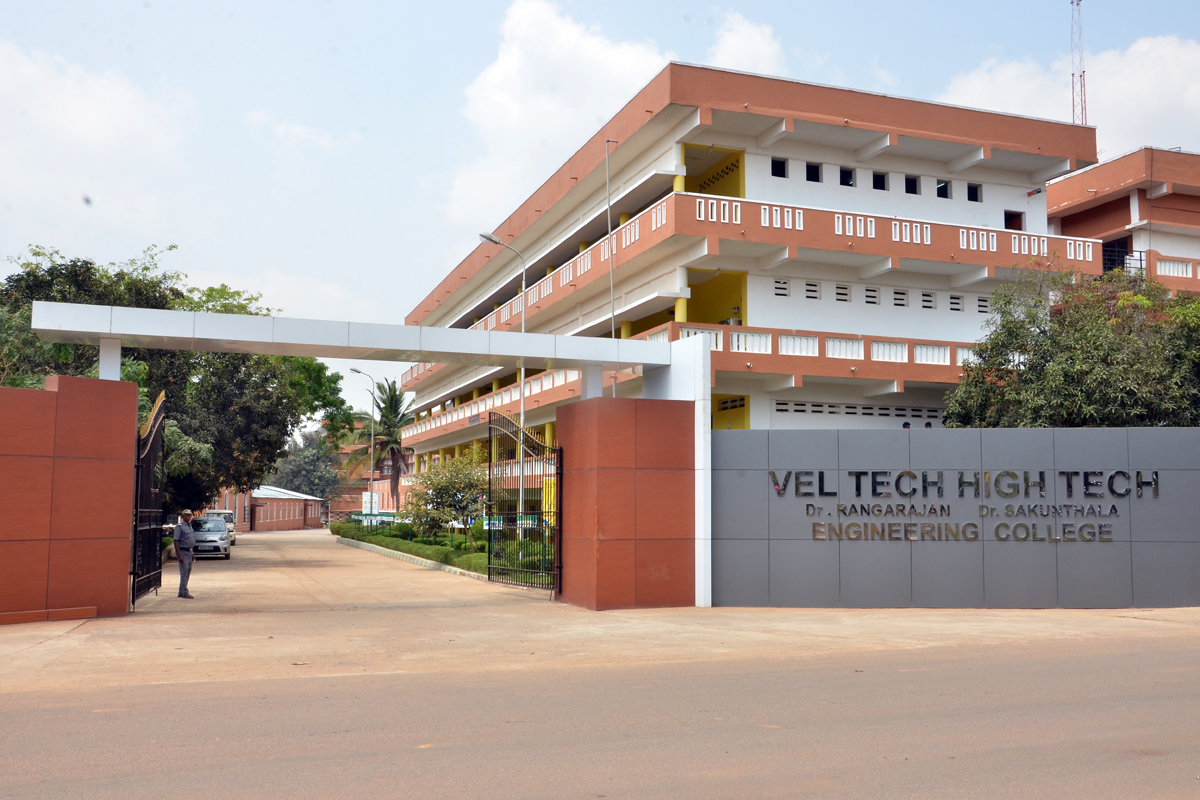
Vel Tech High Tech Dr. Rangarajan Dr. Sakunthala Engineering College is committed to creating an enabling ecosystem for innovation, entrepreneurship and startup development. The Startup Policy provides a structured framework to identify, nurture, mentor, incubate and support innovative ideas and entrepreneurial ventures emerging from the Institution.
The policy promotes a culture in which students and faculty members are encouraged to convert ideas into prototypes, intellectual property, products, services and sustainable enterprises. The policy also facilitates collaboration with industry, government agencies, MSMEs, incubators, investors, mentors and other ecosystem partners.
To establish a vibrant institutional ecosystem that transforms innovative ideas into socially relevant, technology-driven and sustainable startups, while nurturing entrepreneurial talent among students and faculty.
This policy applies to all students, faculty members, researchers, staff, alumni and eligible institutional stakeholders participating in innovation, entrepreneurship, incubation and startup-related activities conducted or supported by the Institution.
| Term | Definition |
|---|---|
| Startup | An innovative venture or enterprise established to develop and scale a product, service or technology. |
| Innovation | A new or significantly improved product, process, service, technology or business model that creates value. |
| Incubation | Structured support provided to an idea or venture through mentoring, infrastructure, technical assistance and ecosystem access. |
| Pre-incubation | The stage in which an idea is validated, refined and developed toward a prototype or business model. |
| Entrepreneur | An individual who identifies an opportunity and organizes resources to create and operate a venture. |
| Mentor | An experienced person who provides guidance, technical, business or domain support to an innovator or entrepreneur. |
| MSME Business Incubator | An institutional platform that supports innovation, entrepreneurship and enterprise development through structured incubation activities. |
| Level | Committee / Role | Key Responsibility |
|---|---|---|
| Strategic | Principal / Institutional Leadership | Policy approval, strategic direction and institutional support |
| Coordination | Startup & Entrepreneurship Cell | Planning, coordination, monitoring and documentation |
| Incubation | MSME Business Incubator | Pre-incubation, incubation, mentoring and ecosystem support |
| Academic Support | Faculty Mentors / Department Coordinators | Technical guidance and student support |
| External Support | Industry / Startup / Mentor Network | Domain expertise, networking and business guidance |
Intellectual property generated through institutional resources, sponsored projects, collaborative research or other institutional support shall be handled in accordance with applicable institutional IP policy, agreements and prevailing laws. Ownership, inventorship, confidentiality, publication and commercialization shall be determined on a case-by-case basis through appropriate institutional procedures.
| Indicator | Examples of Evidence |
|---|---|
| Awareness Programmes | Circulars, attendance, photographs, reports |
| Ideas Generated | Idea registers, hackathon submissions |
| Prototypes / MVPs | Prototype records, demonstrations |
| Startups / Ventures | Registration or venture records |
| IPR | Patent / copyright / design records |
| Funding | Sanction letters, grant records |
| Mentoring | Mentor logs and review records |
| Industry Linkages | MoUs, collaboration records |
| Impact | Revenue, employment, beneficiaries, awards |
This policy is designed to support the objectives of higher education quality, innovation and entrepreneurship promotion and may be implemented in alignment with applicable guidelines and frameworks of AICTE, UGC, NBA, NAAC, Startup India, Ministry of MSME and other competent authorities, as amended from time to time.
Awareness → Idea Submission → Screening → Mentoring → Pre-Incubation → Prototype Development → Validation → Incubation → Funding / Market Linkage → Startup / Venture Growth → Impact Tracking
This policy shall be reviewed periodically, preferably once every three years or earlier when required due to changes in institutional priorities, government regulations, statutory guidelines or the startup ecosystem. Amendments shall be placed before the competent institutional authority for approval.
This Startup Policy is approved for implementation by the competent authority of the Institution.
| Prepared By | Verified By | Approved By |
|---|---|---|
| Name & Signature | Name & Signature | Name & Signature |
The policy owner shall review this document at the stated cycle or earlier due to changes in law, regulation, institutional structure, technology, risk, audit findings or stakeholder requirements. Amendments shall take effect only after approval by the competent authority.
| Prepared / Coordinated by | Reviewed by | Approved by |
|---|---|---|
| Name & Signature | Name & Signature | Name & Signature |