
Central Library Policy & Guidelines

| S. No. | Particulars | Page |
|---|---|---|
| 1 | Introduction and Objectives | 3 |
| 2 | Library Working Hours | 3 |
| 3 | Policy Scope | 3 |
| 4 | Admission and General Code of Conduct | 4 |
| 5 | User Responsibility | 4 |
| 6 | Property Counter Rules | 5 |
| 7 | Borrowing Privileges - Circulation Policy | 5 |
| 8 | Issue, Renewal and Return Guidelines | 6 |
| 9 | Overdue Fines and Lost Materials | 6 |
| 10 | Digital Library and E-Resources | 7 |
| 11 | Clearance and No Dues Certificate | 7 |
| 12 | Records and Monitoring | 7 |
| 13 | Book Purchase Procedure | 8 |
| 14 | Department-wise Journal Purchase | 8 |
| 15 | Online E-Resources and Digital Library | 9 |
| 16 | Digital Library | 9 |
| 17 | Book Circulation Using AutoLib Software | 9 |
| 18 | Reference Collection | 10 |
| 19 | Membership in Other Institution Libraries | 10 |
| 20 | Library Support Facilities | 10 |
| 21 | Library Book Binding Procedure | 11 |
| 22 | procedure for Lost (Missed) Library Books | 11 |
| 23 | Magazine and Newspaper Purchase Procedure | 11 |
| 24 | Old Book Replacement Policy | 12 |
| 25 | library Stock Verification Procedure | 12 |
| 26 | Disposal of Newspapers and Magazines | 12 |
| 27 | Review and Amendment | 13 |
| 28 | References | 13 |
| 29 | Approval and Signatures | 13 |
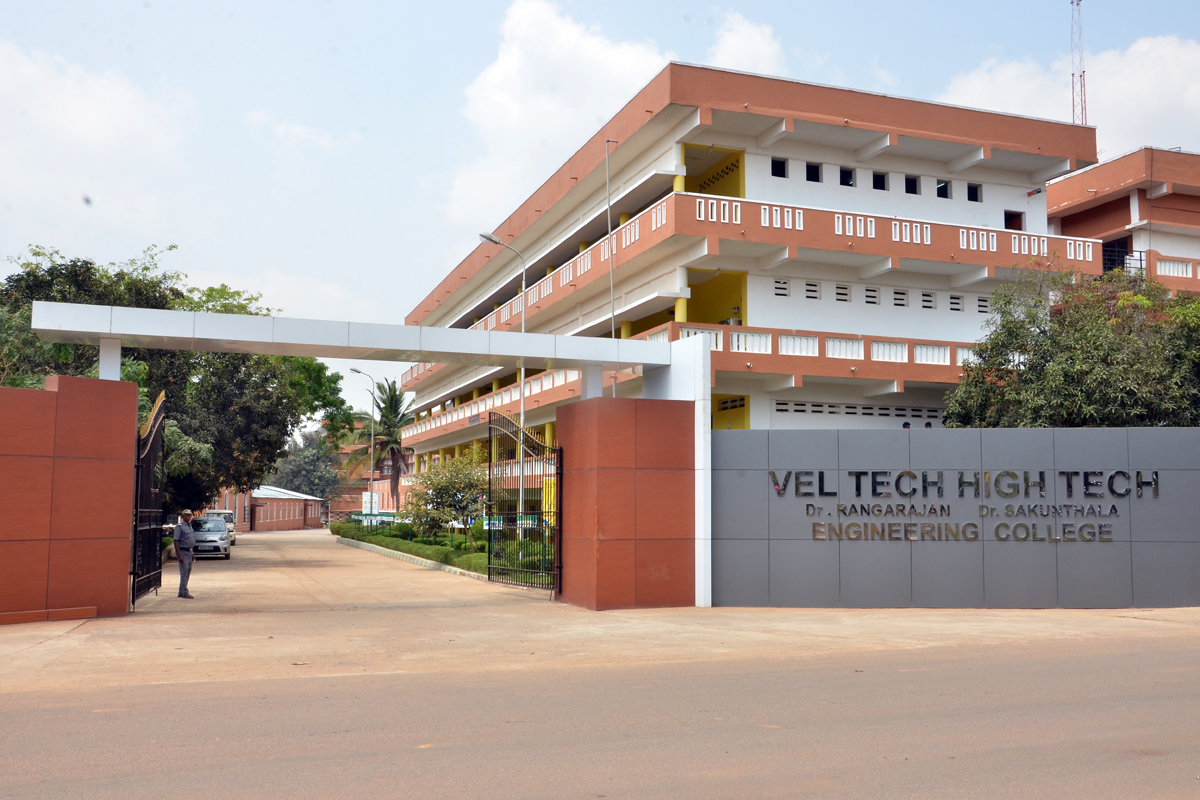
The Vel Tech High Tech Dr.Rangarajan Dr.Sakunthala Engineering College Central Library is dedicated to supporting the academic, research and informational needs of students, faculty and staff. This policy outlines the rules and regulations designed to ensure equitable access to resources, maintain a conducive environment for study, and protect library property.
| Day / Period | Working Hours |
|---|---|
| Monday to Friday | 08:00 AM to 07:00 PM |
| Saturdays and Sundays | 09:00 AM to 04:00 PM |
| Examination Period | 08:00 AM to 08:00 PM |
This policy applies to all users of the Central Library, including students, teaching faculty, non-teaching staff, research scholars and other authorized institutional users. It covers library entry, conduct, property counter rules, borrowing privileges, issue, renewal, return, overdue fines, lost materials, digital resources and library clearance.
Every library user is personally responsible for maintaining discipline, using resources only for legitimate academic and research purposes, protecting issued materials, respecting the rights of other users, and following instructions issued by the Librarian or authorized library staff.
Lending privileges are categorized according to the user role in the Institution.
| User Category | Maximum Books Allowed | Lending Period |
|---|---|---|
| Undergraduate UG Students | 6 Books | 14 Days |
| Postgraduate PG Students | 6 Books | 14 Days |
| Faculty / Teaching Staff | 6 Books | 28 Days |
| Non-Teaching Staff | 2 Books | 28 Days |
All students and staff must return all library materials and clear any outstanding fines to obtain a No Dues Certificate from the library. This certificate is mandatory before graduating, receiving transcripts or terminating employment with the Institution.
The library book purchase process begins by collecting book recommendations from all departments based on the syllabus, curriculum updates, faculty suggestions, student requirements, and research needs. The Librarian verifies the availability of the recommended titles in the library and prepares a consolidated list. Quotations are obtained from approved publishers or vendors, and the proposal is submitted to the Library Committee for review and recommendation. After approval from the Principal and Management, purchase orders are issued to the selected vendors. The received books are verified against the purchase order and invoice, accessioned, classified, catalogued, barcoded, and entered into the library management system. Finally, the books are shelved and made available for students and faculty members.
The Library purchases journals based on the requirements of each department. Every year, departments submit their recommended journal list. The Library Committee reviews the requirements, and after approval from the Principal/Management, subscriptions are placed with authorized publishers or vendors. The journals are made available to support teaching, learning, and research.
The Library provides access to online e-resources to support teaching, learning, and research. The digital library includes IEEE&ASPP, ASME, DELNET, Knimbus (Remote Access), NDLI, NPTEL, and IEEE-Morgan e-Books. These resources are subscribed to or purchased with the approval of the Principal/Management based on departmental requirements and are made available to all eligible users.
The Library has a Digital Library with 30 computer systems to provide access to e-resources, e-journals, e-books, online databases, NPTEL, NDLI, DELNET, IEEE&ASPP ASME, and Knimbus (Remote Access). The facility supports teaching, learning, research, and self-learning for students and faculty.
The Library uses AutoLib Software for book circulation. All issue, return, renewal, and reservation transactions are carried out through the software using the member ID and barcode. The system maintains accurate circulation records and generates reports for efficient library management.
The Library maintains a separate Reference Section consisting of reference books, general books for higher studies, question banks, and students' previous project reports. These resources are available for reference within the library to support academic learning, competitive examinations, and research.
The Library facilitates access to resources available in other institutions. Faculty and students can utilize Anna University Library, British Council Library (BCL), and Anna Centenary Library (ACL) through institutional/library membership or reference access, subject to the respective library rules and regulations.
The Library provides photocopy (Xerox), printing, and scanning facilities for students and faculty to support academic and research activities. For safety and emergency preparedness, fire extinguishers and a first aid box are available in the library premise
The library periodically identifies damaged, torn, or heavily used books that require binding to extend their life and ensure continued use. The Librarian prepares a list of such books and obtains approval from the Principal/Management. The books are then sent to an approved binding agency. After binding, the books are checked for quality, updated in the library records if required, and returned to the shelves for circulation. This process helps preserve valuable library resources and ensures long-term availability for students and faculty.
If a student loses a library book, the student must immediately inform the Librarian. The library verifies the borrowing record and asks the student either to replace the lost book with the latest edition of the same title or to pay the cost of the book as per the library rules, along with any applicable processing charges. After the replacement or payment is completed, the library updates the records, clears the student's library account, and issues a No Due Certificate, if required.
The Library purchases magazines and newspapers every year based on the recommendations of the Library Committee and the needs of faculty and students. After approval from the Principal/Management, subscriptions are placed with authorized vendors. The received magazines and newspapers are recorded and displayed in the library for regular use.
The library periodically reviews its collection to identify old, damaged, outdated, or obsolete books. Replacement is considered based on the relevance of the content, condition of the book, current syllabus, demand from users, and availability of newer editions. After approval from the Library Committee and the Management, updated editions or new titles are purchased to replace the old books. This ensures that the library collection remains current, useful, and aligned with academic and research requirement
Stock verification is conducted annually by the Stock Verification Committee. The physical stock is verified with the accession register and library software records. Missing or damaged books are identified and recorded. A stock verification report is submitted to the Principal for approval and necessary action.
Old newspapers and magazines are retained in the library for the prescribed period as per the institution's policy. After approval from the Library Committee and the Principal/Management, they are disposed of through authorized scrap vendors. Proper records of the disposal are maintained in the library.
The policy owner shall review this document at the stated cycle or earlier due to changes in law, regulation, institutional structure, technology, risk, audit findings or stakeholder requirements. Amendments shall take effect only after approval by the competent authority.
| Prepared / Coordinated by | Reviewed by | Approved by |
|---|---|---|
| Name & Signature | Name & Signature | Name & Signature |